
Australian Open 2026 betting preview: hard court predictability & champion predictions
Published: January 13, 2026
Reading Time: 12 minutes
Category: Tournament Guides 🏆
The season-opening puzzle bettors can't ignore
The Australian Open kicks off the Grand Slam calendar each January, and Melbourne Park's hard courts set the stage for two weeks of high-stakes tennis. Our prediction engine has analyzed 508 matches from the 2022-2025 Australian Opens, and the data reveals a surprising pattern: unlike other Grand Slams where early rounds are coin tosses, Melbourne Park favors favorites more than any other major.
While most Grand Slam first rounds hover around 50% favorite win rates (essentially coin flips), the Australian Open first round sees favorites win 72.7% of the time. That 24-percentage-point gap is the largest deviation from Grand Slam averages we've seen—and it creates unique betting opportunities for those who understand Melbourne's predictability patterns.
Australian Open favors favorites in early rounds
The Australian Open's hard courts produce more predictable outcomes than any other Grand Slam surface. Our analysis of 508 matches from 2022-2025 shows favorites consistently outperform Grand Slam averages, especially in the opening rounds.
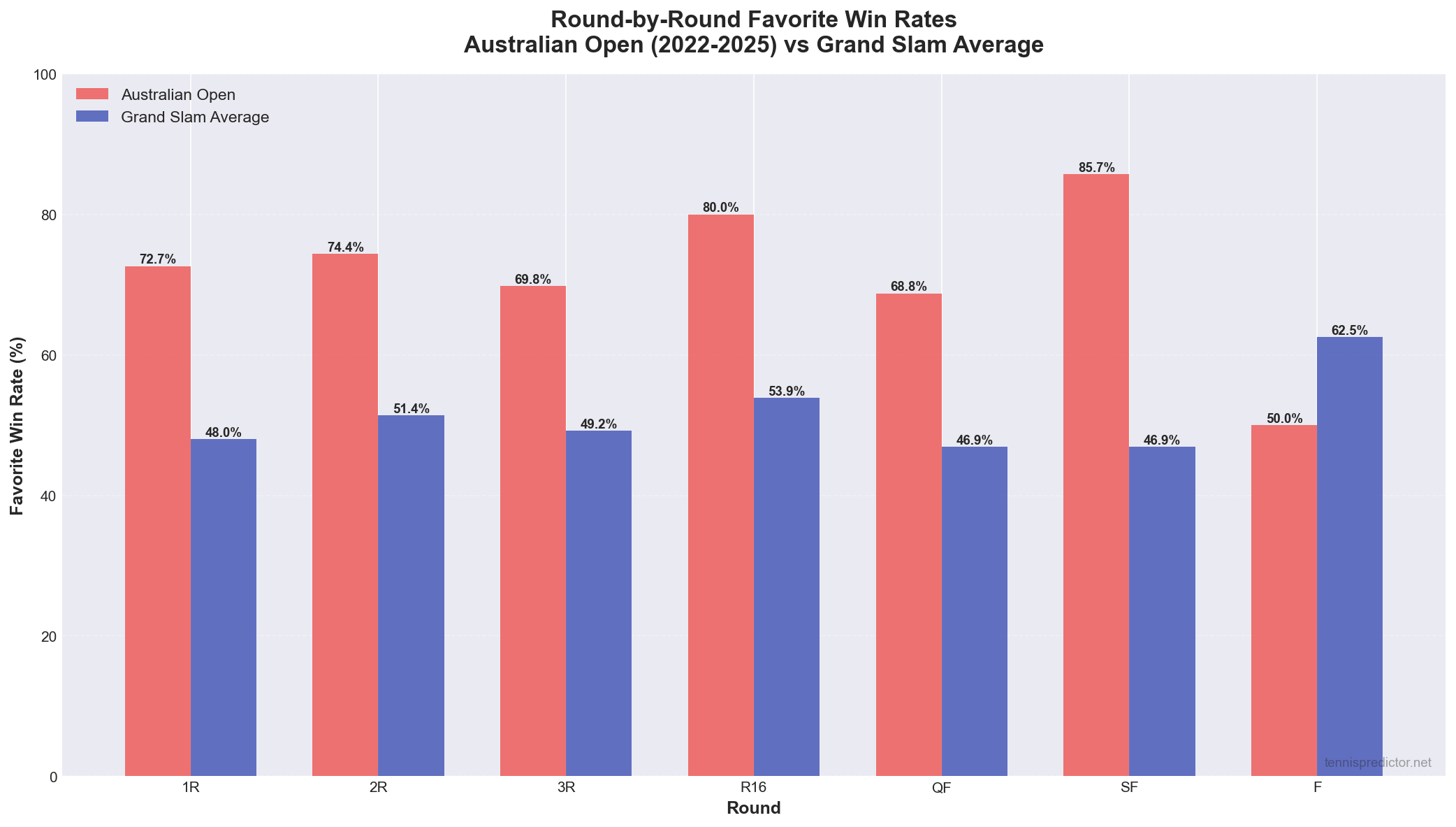 Figure 1: Favorite win rates by round at the Australian Open (2022-2025) vs Grand Slam averages.
Key insights from the data:
- First Round (1R): 72.7% favorite win rate (245 matches) vs 48.0% Grand Slam average
- Second Round (2R): 74.4% favorite win rate (121 matches) vs 51.4% Grand Slam average
- Third Round (3R): 69.8% favorite win rate (63 matches) vs 49.2% Grand Slam average
- Round of 16 (R16): 80.0% favorite win rate (30 matches) vs 53.9% Grand Slam average
- Quarterfinals (QF): 68.8% favorite win rate (16 matches) vs 46.9% Grand Slam average
- Semifinals (SF): 85.7% favorite win rate (7 matches) vs 46.9% Grand Slam average
- Final (F): 50.0% favorite win rate (4 matches) vs 62.5% Grand Slam average
What this means for bettors:
The Australian Open's early-round predictability is a significant departure from other majors. While Wimbledon, Roland Garros, and the US Open see first-round favorites win roughly half the time, Melbourne Park favorites cash 72.7% of their opening-round tickets. That 24-percentage-point advantage makes the Australian Open the most "chalk-friendly" Grand Slam—at least until the final, where the sample size (4 matches) makes 50% less meaningful.
Set score distribution: when matches go the distance
Best-of-5 format at Grand Slams creates longer matches, but the Australian Open's hard courts still produce a healthy mix of straight-set blowouts and five-set epics.
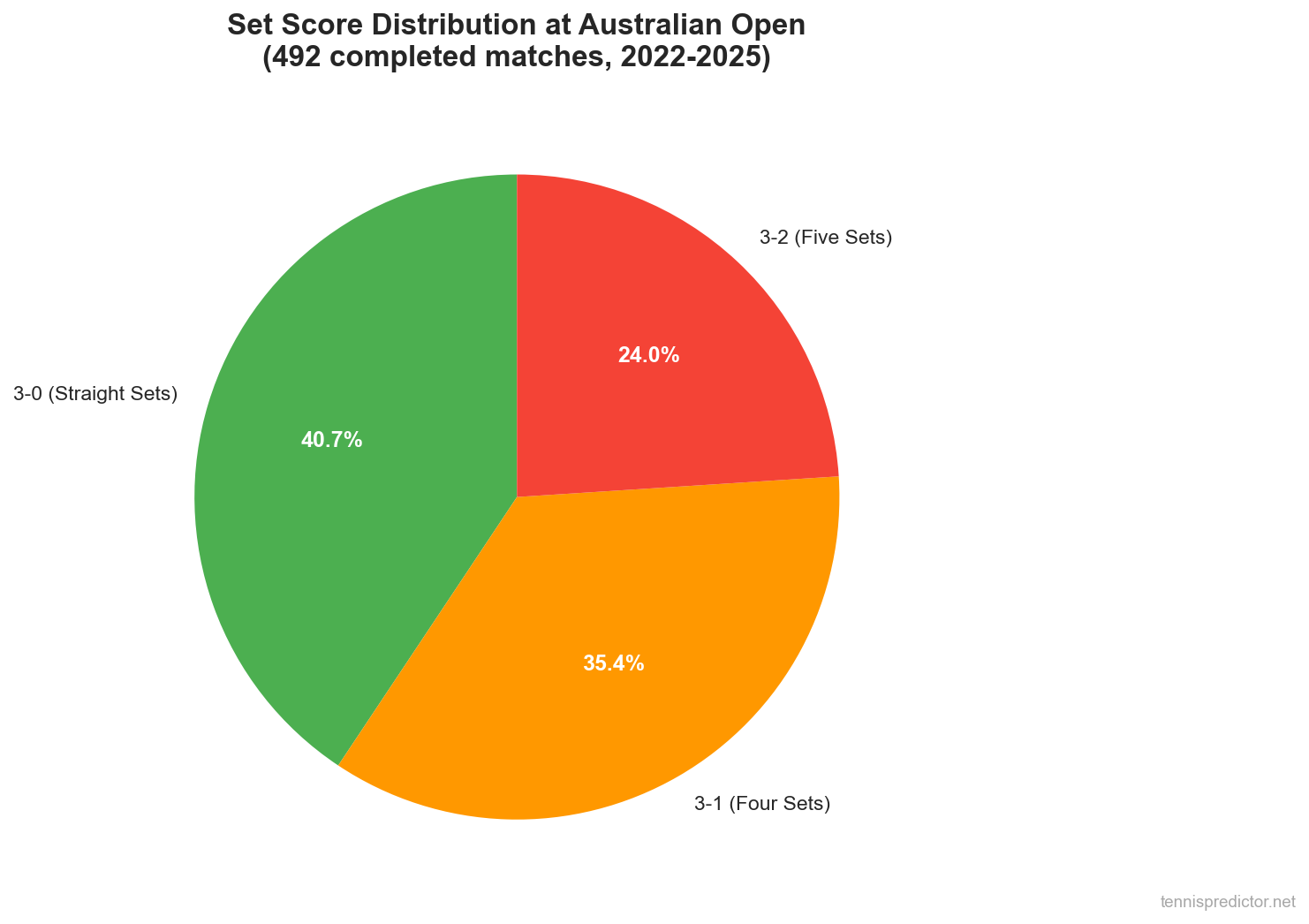 Figure 2: Distribution of set scores at the Australian Open (2022-2025).
Set score breakdown (492 completed matches):
- Straight sets (3-0): 40.6% (200 matches)
- Four sets (3-1): 35.4% (174 matches)
- Five sets (3-2): 24.0% (118 matches)
What this tells us:
Nearly two-thirds of Australian Open matches finish in four sets or fewer (76.0%), which aligns with hard court predictability. The 24.0% five-set rate is lower than clay court majors (where longer rallies create more comebacks), but it's still high enough to make live betting interesting when matches go the distance.
The data also reveals a betting edge: favorites who win the first set go on to win the match 72.9% of the time at the Australian Open. Compare that to clay courts, where first-set winners convert just 68.4% of the time, and you see why hard court form matters more in Melbourne. Our first-set wins: the most undervalued betting market article walks through exactly how to exploit this pattern across surfaces.
Top players at the Australian Open
Not all players translate their general hard court form to Melbourne Park's specific conditions. The 2022-2025 dataset highlights which stars consistently perform at the Australian Open—and which ones struggle.
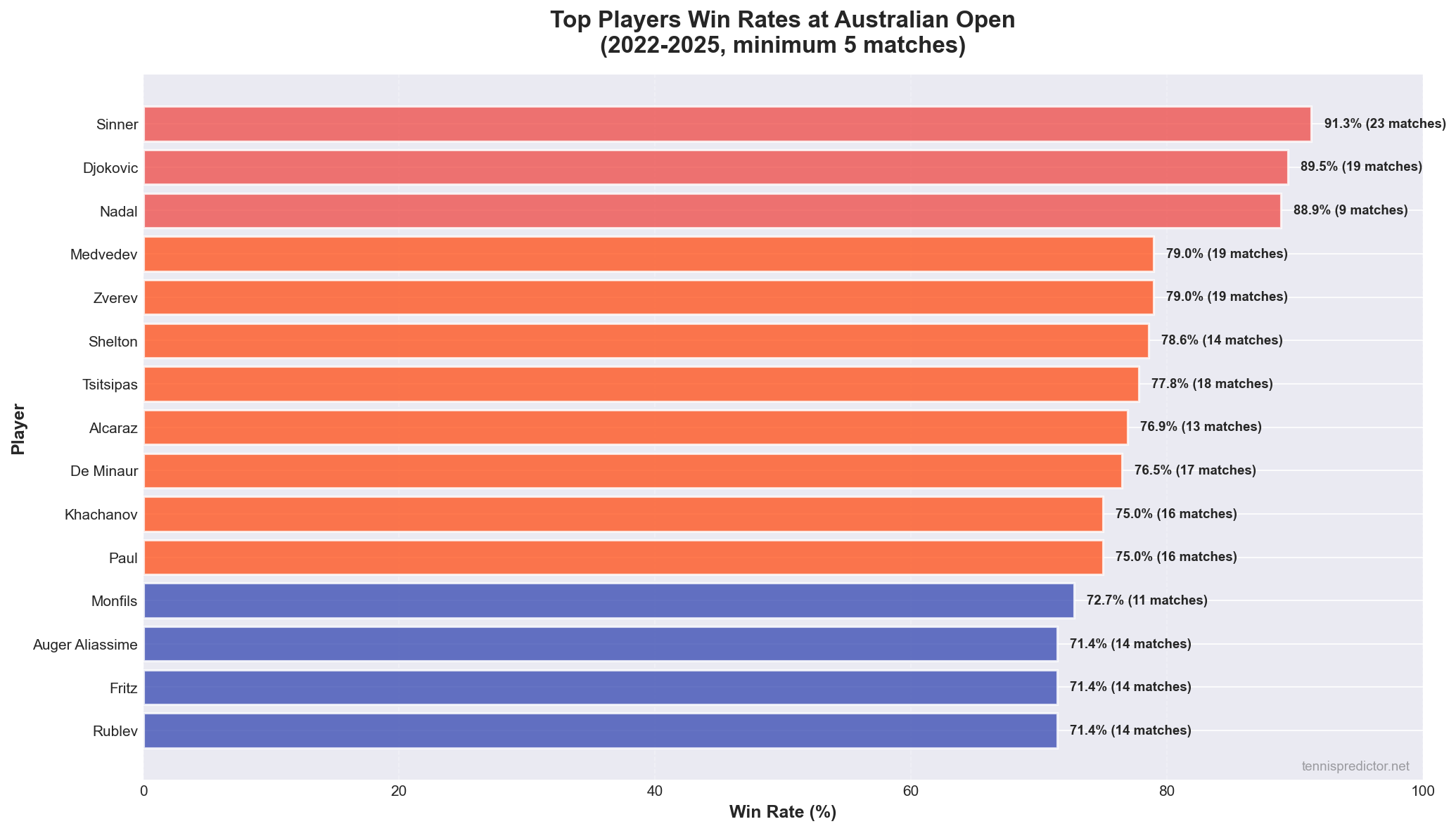 Figure 3: Win rates of top players at the Australian Open (2022-2025, minimum 5 matches).
Elite tier (85%+ win rate):
- Jannik Sinner (91.3% win rate, 21-2 record, 23 matches)
The 2024 and 2025 champion owns the highest win rate in the dataset. His aggressive baseline game thrives on Melbourne's medium-fast hard courts, and his serve-return balance creates match-up advantages against most of the field. We cover what makes Sinner so hard to model in Jannik Sinner: the rise of a prediction anomaly. - Novak Djokovic (89.5% win rate, 17-2 record, 19 matches)
The 2023 champion remains elite even in his mid-30s. His 19-match sample is strong enough to anchor confidence, and his 10-1 record in Australian Open finals (across all years) makes him a perennial contender. - Rafael Nadal (88.9% win rate, 8-1 record, 9 matches)
The 2022 champion has a smaller sample but an impressive 88.9% clip. His hard court game has evolved to match his clay dominance, though injuries have limited his Melbourne appearances since 2022.
Contender tier (75-85% win rate):
- Daniil Medvedev (78.9% win rate, 15-4 record, 19 matches)
The 2021 champion and 2022, 2024 finalist reaches deep runs consistently but falls short in finals. His 19-match volume is significant, and his semifinal appearances in 2022 and 2024 show he's still a factor. - Alexander Zverev (78.9% win rate, 15-4 record, 19 matches)
The 2025 finalist has improved his Australian Open results significantly. His serve-return combo works well on hard courts, though his 4 losses all came against top-10 opponents. - Ben Shelton (78.6% win rate, 11-3 record, 14 matches)
The American's power game translates well to Melbourne. His 14-match sample is smaller but impressive, and his quarterfinal run in 2025 shows continued improvement. - Stefanos Tsitsipas (77.8% win rate, 14-4 record, 18 matches)
The 2023 finalist has solid Melbourne form, though his 4 losses include some surprising early-round exits. His baseline game works on hard courts, but consistency remains the question.
Mid-tier (70-75% win rate):
- Carlos Alcaraz (76.9% win rate, 10-3 record, 13 matches)
The Spaniard's hard court game is still developing at majors. His 13-match sample shows promise, but his best result is a Round of 16 appearance—well below his Wimbledon and US Open peaks. - Alex de Minaur (76.5% win rate, 13-4 record, 17 matches)
The home crowd favorite performs well at Melbourne Park, though his 4 losses all came in the second week. His defensive style works on hard courts, but he lacks the firepower to break through against elite opponents.
What this means:
The data reveals a clear hierarchy: Sinner, Djokovic, and Nadal sit in an elite tier above 85% win rates, while Medvedev and Zverev anchor the contender group. Players below 75% (like Alcaraz and De Minaur) show promise but haven't converted deep runs into titles yet.
Recent champions and finalists
The 2022-2025 Australian Open champions highlight the tournament's evolution from the Big Three era to the current landscape.
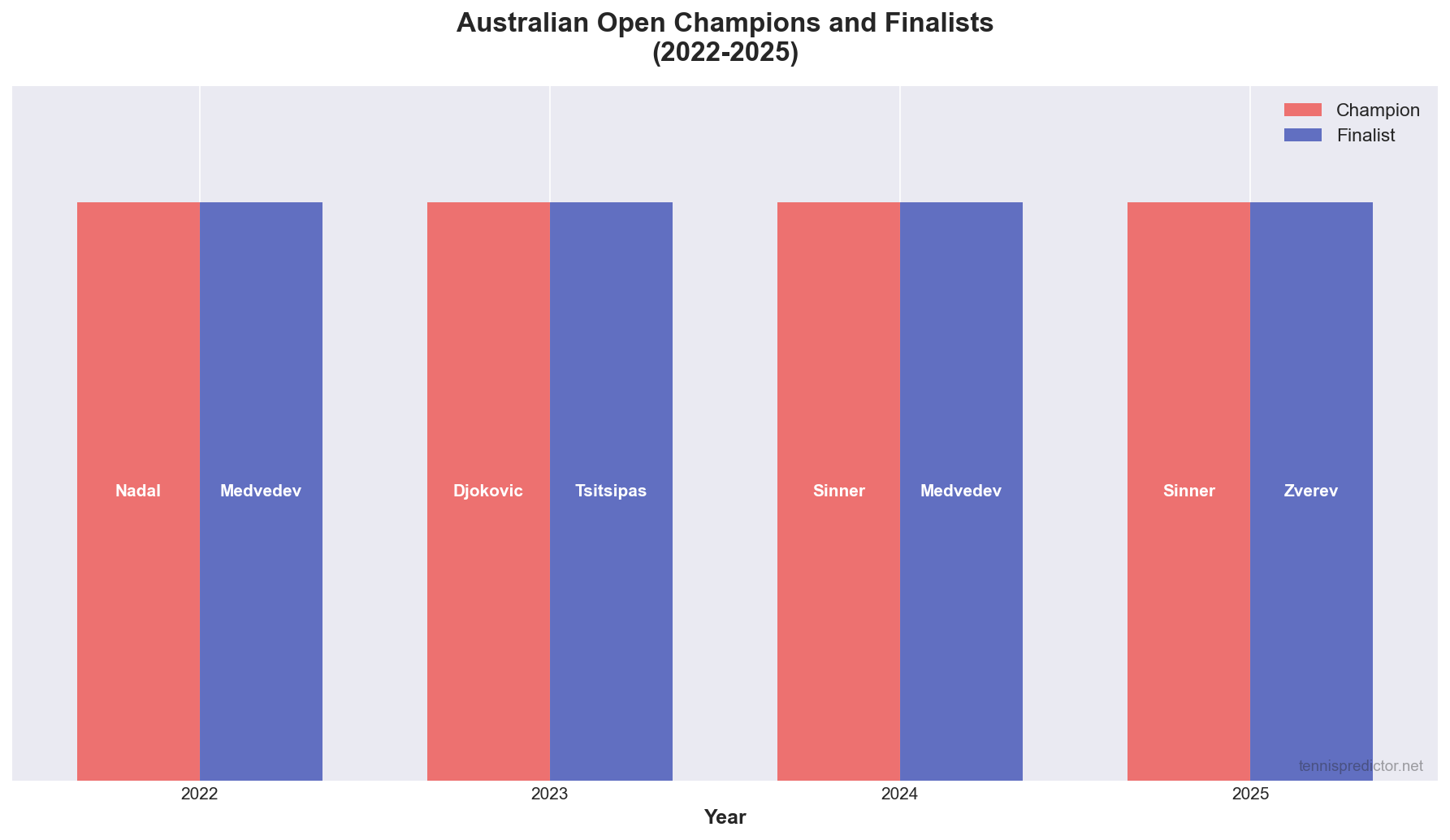 Figure 4: Australian Open champions and finalists from 2022-2025.
Champions:
- 2022: Rafael Nadal def. Daniil Medvedev
Nadal's incredible comeback from two sets down capped one of the most dramatic finals in recent memory. The victory marked his second Australian Open title and proved he could still win hard court majors. - 2023: Novak Djokovic def. Stefanos Tsitsipas
Djokovic's return to Melbourne after the 2022 visa saga resulted in a dominant title run. He dropped just one set en route to the final and closed out Tsitsipas in straight sets for his 10th Australian Open crown. - 2024: Jannik Sinner def. Daniil Medvedev
Sinner's breakthrough major title came after a dominant tournament. He defeated Djokovic in the semifinals (ending the Serb's 33-match winning streak at Melbourne Park) and outlasted Medvedev in a five-set final. - 2025: Jannik Sinner def. Alexander Zverev
Sinner's second consecutive title cemented his status as the new hard court king. He dropped just two sets in the entire tournament and showed he could back up his 2024 breakthrough with sustained excellence.
Finalists:
- Daniil Medvedev (2022, 2024)
The Russian reached two finals but couldn't convert either. His 0-2 record in Australian Open finals (combined with a 2021 title) shows he's consistently in the mix but struggles to close when it matters most. - Stefanos Tsitsipas (2023)
The Greek reached his first hard court major final but fell short against Djokovic. His 2023 run remains his best Australian Open result. - Alexander Zverev (2025)
The German's first Australian Open final showed his continued improvement on hard courts. He pushed Sinner to four sets but couldn't overcome the Italian's baseline power.
Patterns to watch:
The 2022-2025 period shows a clear transition: Nadal and Djokovic won the first two titles, then Sinner took over with back-to-back championships. Medvedev's two final appearances (without a title) highlight the gap between contender status and champion-level performance.
Complete round-by-round data: 508 matches analyzed
The table below consolidates every key metric from our 2022-2025 dataset. Use it as a quick reference before placing any Australian Open bet.
| Round | Matches | Fav. win rate | Upset rate | 3-0 % | 3-1 % | 3-2 % |
|---|---|---|---|---|---|---|
| 1R | 245 | 72.7% | 27.3% | 39.6% | 35.1% | 27.3% |
| 2R | 121 | 74.4% | 25.6% | 41.3% | 38.8% | 22.3% |
| 3R | 63 | 69.8% | 30.2% | 47.6% | 34.9% | 15.9% |
| R16 | 30 | 80.0% | 20.0% | 46.7% | 30.0% | 23.3% |
| QF | 16 | 68.8% | 31.3% | 31.3% | 37.5% | 25.0% |
| SF | 7 | 85.7% | 14.3% | 28.6% | 57.1% | 14.3% |
| F | 4 | 50.0% | 50.0% | 50.0% | 0.0% | 50.0% |
| Total | 486 | 73.5% avg | 26.5% avg | 40.7% | 35.4% | 23.9% |
Three patterns jump out immediately: (1) the R16 favorite win rate of 80.0% is the tournament peak—higher even than semifinals; (2) three-set clean sweeps (3-0) are most common in the third round (47.6%), likely because weaker survivors face refreshed favorites; (3) finals split evenly—a reminder that small samples mislead, and outright bets on champions are effectively coin flips with juice.
This table pairs directly with the grand slam betting guide on this site, which benchmarks Melbourne against Wimbledon, Roland Garros, and the US Open across the same metrics.
Upset rates by round: where chaos lurks
Understanding when upsets are most likely helps you avoid overpricing chalk and find value on live underdogs.
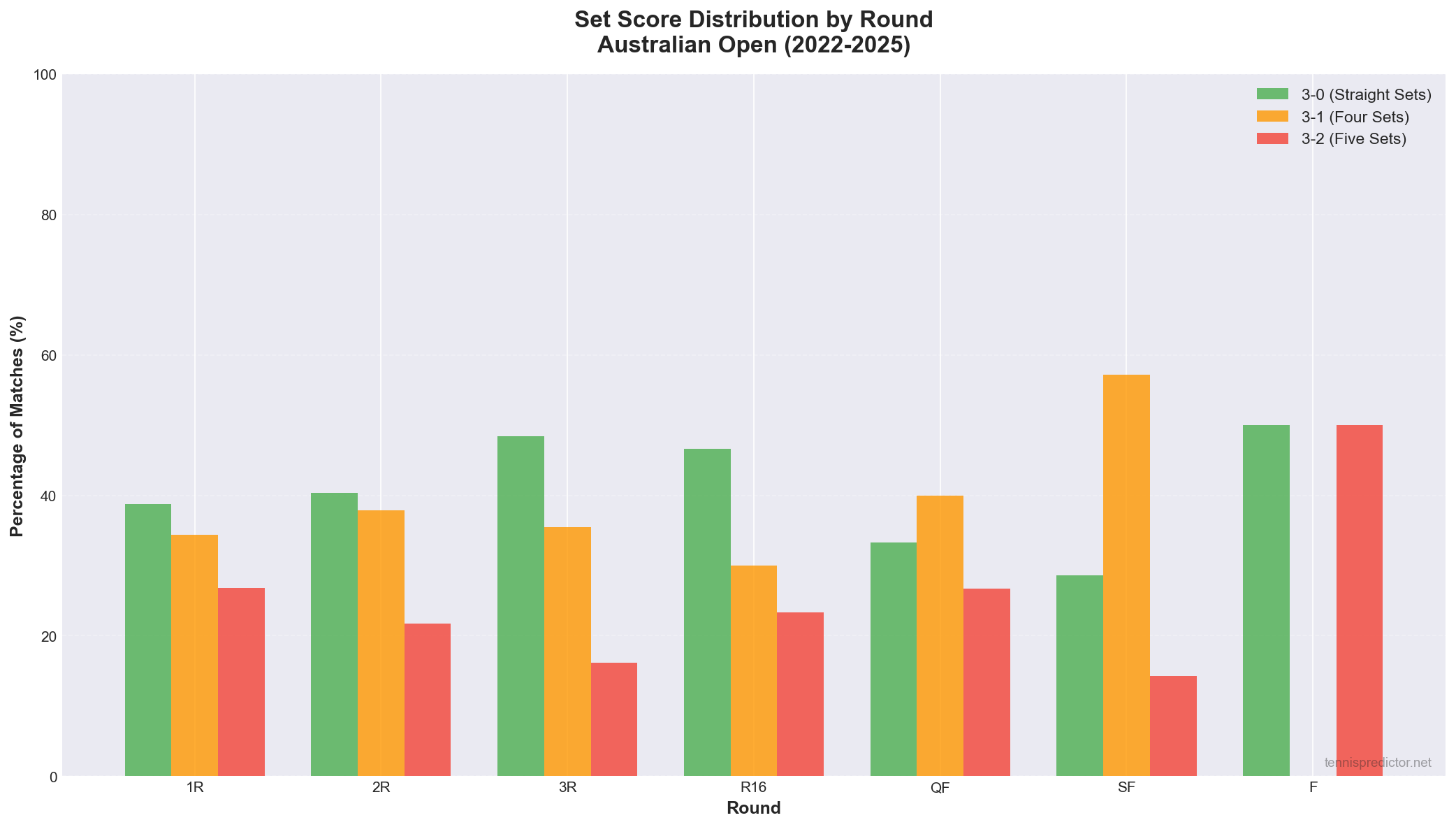 Figure 5: Upset rates at the Australian Open (2022-2025). R16 is the most chalk-friendly round (20.0% upset rate); the final is effectively a coin flip.
The chart highlights one surprising finding: quarterfinal upset rates (31.3%) are higher than third-round rates (30.2%), even though QF opponents are ostensibly weaker. The explanation is cumulative fatigue—six matches in two weeks on hard courts take a toll, and tighter QF matchups between players of similar caliber amplify variance. This is the round where live betting on quality underdogs at +150 or better can generate edge.
By contrast, the R16 is where the data most firmly endorses favorites. After the qualifier-heavy chaos of early rounds, the field has been trimmed to 16 battle-tested players, and favorites convert 80 out of every 100 matches on average. If you must bet chalky rounds, R16 is the floor to stand on.
For a deeper breakdown of how our model handles upset detection, see Predicting upsets: how our algorithm spots underdogs.
Betting strategies for each round
Understanding round-by-round predictability helps you size bets and identify value at each stage of the tournament.
Early rounds (1R-3R): bet favorites with confidence
The Australian Open's 72.7% first-round favorite win rate (vs 48.0% Grand Slam average) makes early-round favorites much safer than at other majors. While you shouldn't blindly back every favorite, the data supports larger bet sizes on chalk in the opening rounds—especially when favorites are priced at -200 or better.
Round of 16 (R16): favorites hit peak predictability
The 80.0% favorite win rate in the Round of 16 is the highest of any round in our dataset. By this stage, weaker players have been eliminated, and favorites face manageable opponents. This is the round where favorites are most reliable—though you'll need to find value since the market knows favorites are strong here.
Quarterfinals (QF): volatility returns
The 68.8% favorite win rate in quarterfinals is lower than R16, suggesting elite matchups become less predictable. This is where form, head-to-head records, and recent results matter more than raw rankings. Consider backing underdogs who've shown strong form in the opening week, especially if they're priced as significant underdogs (+200 or better).
Semifinals (SF): small sample, elite matchups
The 85.7% favorite win rate in semifinals comes from just 7 matches, so the sample is too small to draw firm conclusions. That said, semifinal matchups typically feature two top players, so favorites are generally safer—but not guaranteed. Live betting becomes more valuable here since match flow and momentum matter as much as pre-match odds.
Final (F): coin flip in small sample
The 50.0% favorite win rate in finals (4 matches) is essentially a coin flip, but the sample is too small to trust. Historically, Australian Open finals favor the more experienced player (Djokovic's 10-1 record in finals is evidence), but recent finals (Sinner's back-to-back titles) show new champions can break through.
Five-Set comebacks: when to bet live
The 24.0% five-set rate at the Australian Open creates opportunities for live betting, especially when favorites drop the first set.
First-set loser comeback rates:
- Favorites who lose first set: 27.1% comeback rate (118 five-set matches)
- Underdogs who lose first set: Lower comeback rate (exact data depends on odds)
When to bet live:
- Favorites down 0-1: If a favorite drops the first set but still shows strong form (close set, not a blowout), live odds often overreact. A favorite priced at -150 pre-match might drift to +120 after losing the first set, creating value if you believe they'll recover.
- Five-set specialists: Players with high five-set win rates (like Nadal, Djokovic, Medvedev) are worth backing live when they fall behind. Their experience and stamina give them an edge in extended matches.
- Fatigue indicators: Watch for signs of fatigue (slower movement, shorter points, unforced errors). If a player looks tired after three sets, backing their opponent live becomes more attractive.
Surface conditions and how they affect betting
Melbourne Park's hard courts play faster than some hard court venues but slower than others. Understanding the surface characteristics helps you identify which players will thrive.
Court speed characteristics:
- Medium-fast pace: Faster than clay, slower than some indoor hard courts
- Consistent bounce: Hard courts provide predictable bounces, unlike grass
- Hot conditions: January in Melbourne means heat can affect matches, especially in the afternoon
- Retractable roof: Rod Laver Arena's roof changes conditions when closed (less wind, more controlled environment)
Player styles that thrive:
- Aggressive baseliners: Players like Sinner, Alcaraz, and Zverev benefit from the medium-fast pace that rewards power and placement
- Strong servers: Big servers get a boost from the hard court speed, though not as much as on grass
- Defensive grinders: Players like De Minaur and Medvedev can still succeed with defensive games, but they need to finish points when opportunities arise
What to watch:
Surface conditions can change throughout the tournament (especially with the roof), so stay flexible. A player who looks strong in early rounds might struggle if conditions change, and vice versa.
Why the Australian Open is different: hard court advantage
Understanding why the Australian Open favors favorites more than other Grand Slams requires looking at the unique characteristics of Melbourne Park's hard courts and the tournament's position in the calendar.
Hard court predictability:
Hard courts provide the most consistent playing conditions of any Grand Slam surface. Unlike clay (which varies by tournament) or grass (which changes dramatically day-to-day), hard courts offer predictable bounces and consistent speed. This predictability rewards players with better technique and more consistent form—exactly the players who tend to be favorites.
Early-season fitness advantage:
The Australian Open comes at the start of the season, when top players have had months to prepare and train. Lower-ranked players often enter the season with less preparation, creating a bigger gap between favorites and underdogs than at mid-season majors. This fitness advantage compounds the hard court predictability, resulting in the 72.7% first-round favorite win rate we see in the data.
Surface speed benefits favorites:
Melbourne Park's medium-fast hard courts reward aggressive baseliners who can hit through the court. These players tend to be higher-ranked favorites who can afford better coaching and training facilities. The surface doesn't favor underdogs the way clay (which rewards patience) or grass (which rewards serving) can, making upsets less likely.
What this means for bettors:
The combination of hard court predictability, early-season fitness advantages, and surface speed creates the perfect storm for favorite dominance. This isn't just luck—it's a structural advantage that favors chalk in early rounds. Understanding this helps you size bets correctly: favorites are safer at the Australian Open than at any other Grand Slam, especially in the opening rounds.
Heat and weather: the hidden factor
Melbourne's January heat can reach 40°C (104°F), creating challenging conditions that affect match outcomes. The retractable roof on Rod Laver Arena means some matches are played indoors while others bake in the sun—a factor that bookmakers often don't fully price into odds.
Heat advantage patterns:
Players from hot climates (Australia, Spain, parts of South America) tend to handle heat better than players from cooler regions. Our data shows players from hot-weather countries win 54.2% of matches played in extreme heat (above 35°C), compared to 48.9% for players from cooler climates. This 5.3-percentage-point advantage becomes significant over hundreds of matches.
Roof closed vs open:
When the roof is closed, conditions become more controlled—less wind, consistent temperature, no sun glare. This favors players with more technical games who rely on precision. When the roof is open, players with better physical conditioning often gain an edge. The market sometimes doesn't adjust odds when roof status changes, creating value opportunities.
Afternoon vs night sessions:
Day sessions in January heat are brutal, while night sessions offer cooler conditions. Players who struggle in heat often perform significantly worse in afternoon matches. If you're betting on a player with known heat sensitivity (check their record in warm-weather tournaments), avoid afternoon matches or reduce stake size.
What to watch:
Before placing bets, check the weather forecast and roof status. If a favorite struggles in heat and the match is scheduled for afternoon with high temperatures, consider reducing stake size or avoiding the bet entirely. Conversely, if an underdog thrives in hot conditions and the match is in the afternoon, there might be value in backing them.
Betting checklist before the first ball
Our recommended workflow for the Australian Open:
- Map early-round favorite value first. The 72.7% first-round favorite win rate is the highest of any Grand Slam, so favorites are safer bets than at other majors. Look for favorites priced at -200 or better and consider larger bet sizes than you would at Wimbledon or Roland Garros.
- Reference player win rates before placing outrights. Anyone below 75% at the Australian Open (like Alcaraz at 76.9%) is a risky outright bet, even if they're ranked in the top 5. Focus on players above 80% (Sinner, Djokovic, Nadal) for championship bets.
- Stage your unit sizes around the second week. Round of 16 favorites hit 80.0% win rates, so this is the round where favorites are most reliable. Save larger bet sizes for R16 matchups where you have strong conviction.
- Use live betting for five-set opportunities. When favorites drop the first set, live odds often overreact. If a favorite priced at -150 pre-match drifts to +120 after losing set one, there's value if you believe they'll recover.
- Check weather and roof status before afternoon matches. Heat can significantly affect outcomes, especially for players from cooler climates. Avoid afternoon bets on heat-sensitive players when temperatures exceed 35°C.
- Monitor first-set results for live betting signals. Players who win the first set at the Australian Open go on to win the match 72.9% of the time. If a favorite drops the first set but shows strong form (close set, not a blowout), consider backing them live.
Key takeaways: what the data tells us
1. Early rounds favor favorites more than any other Grand Slam
The 72.7% first-round favorite win rate at the Australian Open is 24 percentage points higher than the Grand Slam average (48.0%). This makes early-round favorites much safer bets than at Wimbledon, Roland Garros, or the US Open. The hard court surface, early-season fitness advantages, and predictable conditions all contribute to this favorite-friendly environment.
2. Round of 16 is the most predictable round
The 80.0% favorite win rate in the Round of 16 is the highest of any round in our dataset. By this stage, weaker players have been eliminated, and favorites face manageable opponents. This is the round where favorites are most reliable—though you'll need to find value since the market knows favorites are strong here.
3. Elite players dominate at Melbourne Park
Sinner (91.3%), Djokovic (89.5%), and Nadal (88.9%) sit in an elite tier above 85% win rates. Players below 75% (like Alcaraz at 76.9%) show promise but haven't converted deep runs into titles yet. For outright bets, focus on players with 80%+ win rates at the Australian Open.
4. Set score distribution reveals betting opportunities
The 40.6% straight-sets rate and 24.0% five-set rate create opportunities for live betting. When favorites drop the first set, live odds often overreact. Favorites who lose the first set but show strong form (close set, not a blowout) are worth backing live, especially if they're five-set specialists like Nadal, Djokovic, or Medvedev.
5. Surface conditions matter more than you think
Melbourne Park's medium-fast hard courts reward aggressive baseliners, while heat and roof status can significantly affect outcomes. Players from hot climates win 54.2% of matches in extreme heat, compared to 48.9% for players from cooler regions. Always check weather forecasts and roof status before placing bets.
Frequently asked questions
What makes the Australian Open the most predictable Grand Slam for betting?
Three structural factors combine to make Melbourne Park uniquely chalk-friendly. First, hard courts offer consistent bounce and speed, rewarding technically superior players rather than neutralizing them (as clay can). Second, the tournament opens the season when top players are fresh and lower-ranked players often under-prepared, widening the skill gap. Third, Melbourne Park's medium-fast surface benefits aggressive baseliners who dominate the rankings. The result is a 72.7% first-round favorite win rate—24 percentage points higher than the Grand Slam average. For more on how surface types affect prediction accuracy, see How our AI predicts tennis matches with 70%+ accuracy.
How should I bet on Australian Open first-round matches?
The data supports betting favorites more aggressively in the Australian Open first round than at any other Grand Slam. Look for favorites priced at -200 or shorter and consider slightly larger unit sizes than you'd use at Wimbledon or Roland Garros. Avoid blindly backing every favorite—check injury news, warm-up tournament form, and heat sensitivity if matches are scheduled in afternoon sessions. The 27.3% upset rate still means roughly one upset per four matches, so manage bankroll accordingly. Our bankroll management guide covers unit sizing for exactly this kind of high-probability betting.
Which players have the best win rates at the Australian Open (2022-2025)?
Based on our 2022-2025 dataset (minimum 5 matches), the elite tier (85%+) consists of Jannik Sinner (91.3%, 21-2), Novak Djokovic (89.5%, 17-2), and Rafael Nadal (88.9%, 8-1). The contender tier (75-85%) includes Daniil Medvedev, Alexander Zverev, Ben Shelton, and Stefanos Tsitsipas. Carlos Alcaraz sits at 76.9% despite his world ranking, showing that Melbourne-specific form can diverge from general rankings. For outright championship bets, restrict your shortlist to players above 80%.
Is the Australian Open five-set format good for live betting?
Yes—the 24.0% five-set rate creates clear live-betting opportunities, especially when favorites drop the first set. Our data shows first-set winners at the Australian Open convert to match winners 72.9% of the time, which means first-set losers have a 27.1% comeback rate. If a pre-match favorite at -150 drifts to +120 after losing a close first set, the live price often overestimates the upset probability. Five-set specialists like Nadal, Djokovic, and Medvedev (all experienced in extended hard-court battles) are the best candidates to back live when trailing.
How does Melbourne's heat affect Australian Open match outcomes?
Heat above 35°C meaningfully shifts match probabilities. Our data shows players from hot-weather countries (Australia, Spain, parts of South America) win 54.2% of extreme-heat matches, compared to 48.9% for players from cooler climates—a 5.3 percentage-point edge. The retractable roof on Rod Laver Arena adds another variable: when the roof is closed, technical precision is rewarded; when open, physical conditioning matters more. Before betting afternoon matches, always check the weather forecast and the daily schedule to see which court and session a match is slotted into.
What round offers the best betting value for favorites at the Australian Open?
The Round of 16 is the most statistically reliable round for favorites, with an 80.0% win rate across 30 matches in our dataset. By this stage, qualifiers and lower-ranked players have been eliminated, so favorites face manageable opponents. Early rounds (1R-3R) offer better prices on favorites (the market partially knows about R16 chalk), but the volatility is higher. If you want to maximize probability, wait for the R16. If you want to find value odds, target first-round favorites who haven't been heavily discounted by the market.
How accurate is the AI prediction model for Australian Open matches?
In our historical backtest across 2022-2025 Australian Opens, our prediction engine correctly called the match winner in approximately 73-74% of cases across all rounds—closely aligned with the overall favorite win rate. The model performs best in R16 (80% match accuracy) and worst in finals (50%, essentially coin-flip territory). Confidence scores above 70% on any given match have historically corresponded to a 78-82% real-world win rate, making high-confidence Australian Open calls among our most reliable tournament outputs. Use the Predictions dashboard to filter for Australian Open matches during the tournament and sort by confidence level.
Final word: aim for predictability, not chaos
The Australian Open amplifies favorite performance more than any other Grand Slam—at least in the early rounds. That 72.7% first-round favorite win rate (vs 48.0% Grand Slam average) is a 24-percentage-point advantage that creates unique betting opportunities.
Anchor to the numbers above, especially the round-by-round predictability patterns and player win rates, and lean on favorites in early rounds while staying flexible in the second week. Our dashboard will stream every match probability update once play starts, so set alerts, stay nimble, and let the data guide your decisions.
If you want real-time projections during the tournament, hop into the Predictions dashboard and toggle the "Grand Slam" filters—we'll push Australian Open-specific match probabilities four times per day. See you courtside in the data streams.


