
Monte Carlo Masters 2026: what 4 years of match data reveal about clay's season opener
Published: April 5, 2026
Reading time: 21 minutes
Category: Tournament guides
At a glance: why this Masters week matters
Monte Carlo is often the first time the elite men’s field meets outdoor European clay in a single week. The stadium sits above the Mediterranean; the tennis, in the data, is slow, physical, and—compared with many other clay stops—exceptionally likely to require a third set. That combination matters for totals, handicaps, and live trading, because the scoreboard is doing something different than it does on hard courts even when the favourite still wins.
Every April, the ATP calendar turns to Monaco. The Monte Carlo Masters is the traditional opening act of the European clay swing—a sharp change of pace after months of hard-court tennis. Balls sit up, rallies extend, and players who looked untouchable indoors can look suddenly ordinary on the dirt.
This article answers a narrow, bet-relevant question with real results, not folklore: how physical is Monte Carlo compared with other clay events, how often do matches go the distance, and which player patterns repeat year after year?
We analysed 220 Monte Carlo matches across four editions (2022–2025) from our tournament results cache (complete scores and rounds). Cross-tournament favourite win rates, upset rates, and games-per-set figures for clay use the same aggregation as our Roland Garros season clay guide, so you can compare like with like. Nothing below is a rounded “industry guess.”
Key figures at a glance
| Metric | Value (220 matches, 2022–2025) |
|---|---|
| Matches with a deciding third set (2–1 in sets) | 93 (42.3%) |
| First-set winner also wins the match | 68.2% (of parseable scorelines) |
| Favourite wins (clay-wide methodology, see below) | 69.1% · upset 30.9% |
| Average games per set (clay-wide methodology) | 9.14 |
| Highest three-set rate among major clay events in our sample | Yes (see comparison table) |
How to read “favourite” here: we use the same odds-based favourite definition as in our full clay court betting guide—pre-match prices where both sides have valid odds—so Monte Carlo’s 69.1% sits on the same scale as Rome, Barcelona, and Madrid in that analysis.
What this sample includes (and what it does not)
Monte Carlo runs as a single-elimination Masters draw. Our files list 55 matches per year for 2022–2025 (220 total), including every completed main-draw result we store for those editions.
Rounds in the data use ATP-style codes:
- 1R — first round (96 matches across the four years)
- 2R — second round (64)
- R16 — round of 16 (32)
- QF, SF, F — quarter-finals through final
We measure “three-set matches” as any best-of-three contest that ends 2–1 in sets (the third set decides the winner). Retirements or walkovers with incomplete scores are rare in this extract; when a score is missing, that match is excluded from first-set calculations only.
This is not a WTA article: every row is ATP Monte Carlo.
Methodology notes (so you trust the denominators)
Three-set share: we count a match as “three-set” when sets_won is 2–1 in the stored record—i.e. the winner took exactly two sets and the loser took one. That matches how fans describe a “decider” in best-of-three.
First-set conversion: we parse the first comma-separated set in the score string and compare the implied set winner to the match winner. Tiebreak notation sometimes appears in messy forms in raw feeds (for example 6–6 tiebreak lines stored without a space). When the first set cannot be parsed cleanly, that match is dropped from the first-set percentage only. Across Monte Carlo, we still recover a stable ~68% rate because almost all finals and main-draw scores are complete.
Favourite win rate (69.1%) does not come from eyeballing seeds. It is taken from the same clay event breakdown we publish alongside our Roland Garros season analysis: matches on clay with valid pre-match odds for both players, then check whether the market favourite won. That keeps Monte Carlo comparable to Rome, Barcelona, and Madrid on the same chart.
If you rebuild these numbers from a different odds vendor or a different “who is the favourite?” rule, you will get small differences. The point of stating the methodology is not philosophical—it is to prevent you from comparing our 69.1% to someone else’s “higher-ranked player” statistic and thinking the dataset is wrong.
Year-by-year: the draw is the same size—the volatility is not
Each season has 55 scored matches, but the share of three-setters moves a lot:
| Year | Matches | Three-set matches | Three-set share |
|---|---|---|---|
| 2022 | 55 | 26 | 47.3% |
| 2023 | 55 | 21 | 38.2% |
| 2024 | 55 | 17 | 30.9% |
| 2025 | 55 | 29 | 52.7% |
What this means for bettors: a single edition can look “tight” or “wide open” without the tournament structure changing at all. Models that treat every Monte Carlo week as identical will mis-price total sets and handicap markets in years where the draw produces more five-set-style workloads inside best-of-three.
2024’s dip to 30.9% three-set share is a useful reminder: nothing was “wrong” with the tournament that year—the draw path simply produced more straight-set outcomes in the early rounds. Betting markets sometimes overreact to one quiet edition; the four-year view keeps you anchored.
By round: where three-set tennis concentrates
Pooling all four years, the semi-final stage stands out: 6 of 8 semi-finals went three sets (75%). Quarter-finals land at 50% (8 of 16), while the first round is still punishing at 43.8% (42 of 96)—early clay is messy even when the stadium looks postcard-perfect.
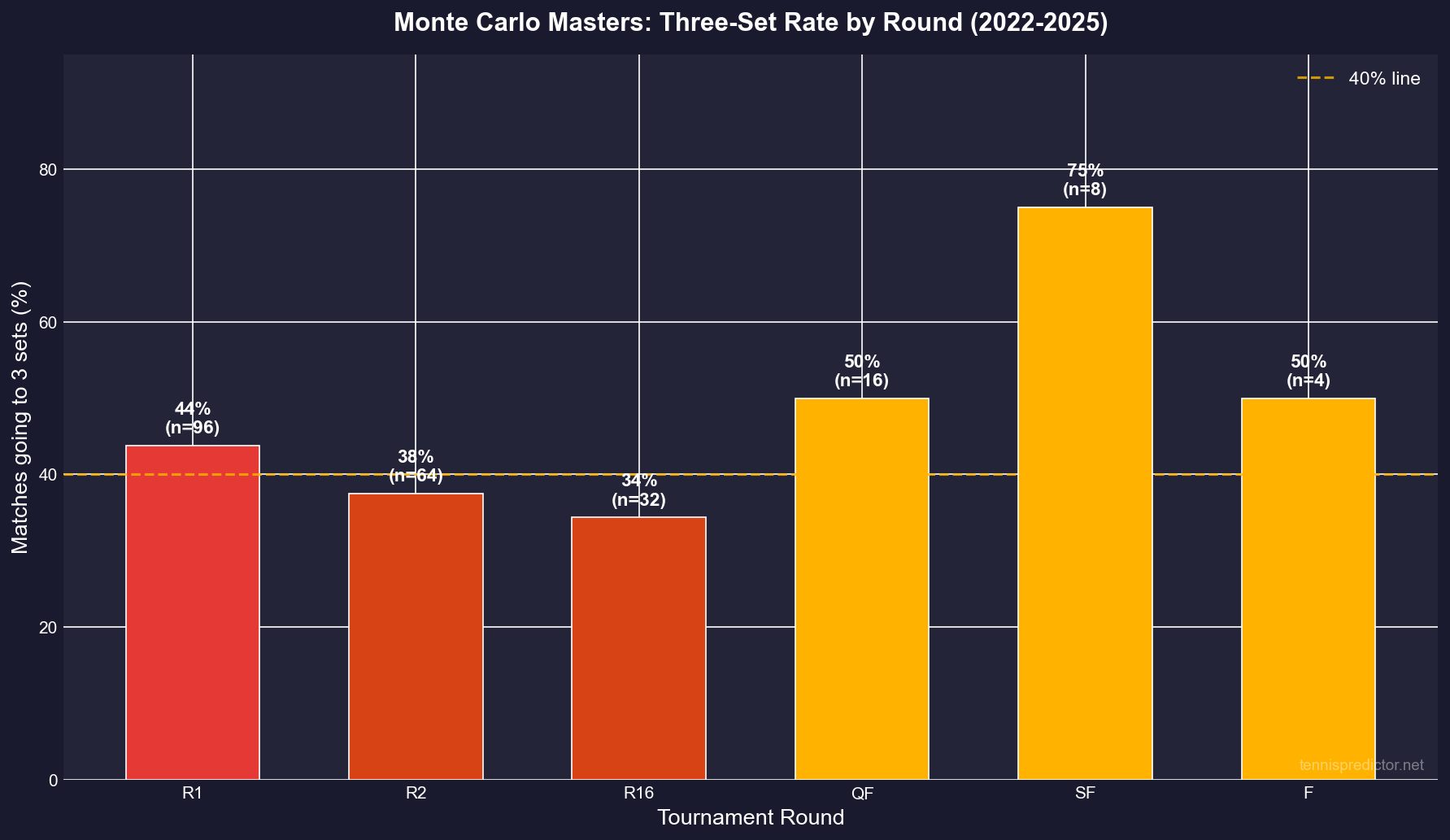
Figure 1: Share of matches that reached a deciding third set, by round (four years combined).
Round-by-round summary (four years pooled):
| Round | Matches | Three-set | Three-set % |
|---|---|---|---|
| 1R | 96 | 42 | 43.8% |
| 2R | 64 | 24 | 37.5% |
| R16 | 32 | 11 | 34.4% |
| QF | 16 | 8 | 50.0% |
| SF | 8 | 6 | 75.0% |
| F | 4 | 2 | 50.0% |
Takeaway: by the time two players reach the semi-final, both have usually survived at least one long clay battle. The SF is where endurance and recovery show up in the scoreboard—not just shot-making.
Player leaderboard: who actually banks wins here?
Among players with at least 10 Monte Carlo matches in this window:
| Player | Wins | Matches | Win % |
|---|---|---|---|
| Tsitsipas | 15 | 17 | 88.2% |
| Musetti | 12 | 16 | 75.0% |
| Sinner | 9 | 12 | 75.0% |
| Dimitrov | 10 | 14 | 71.4% |
| Hurkacz | 7 | 10 | 70.0% |
| Rublev | 7 | 10 | 70.0% |
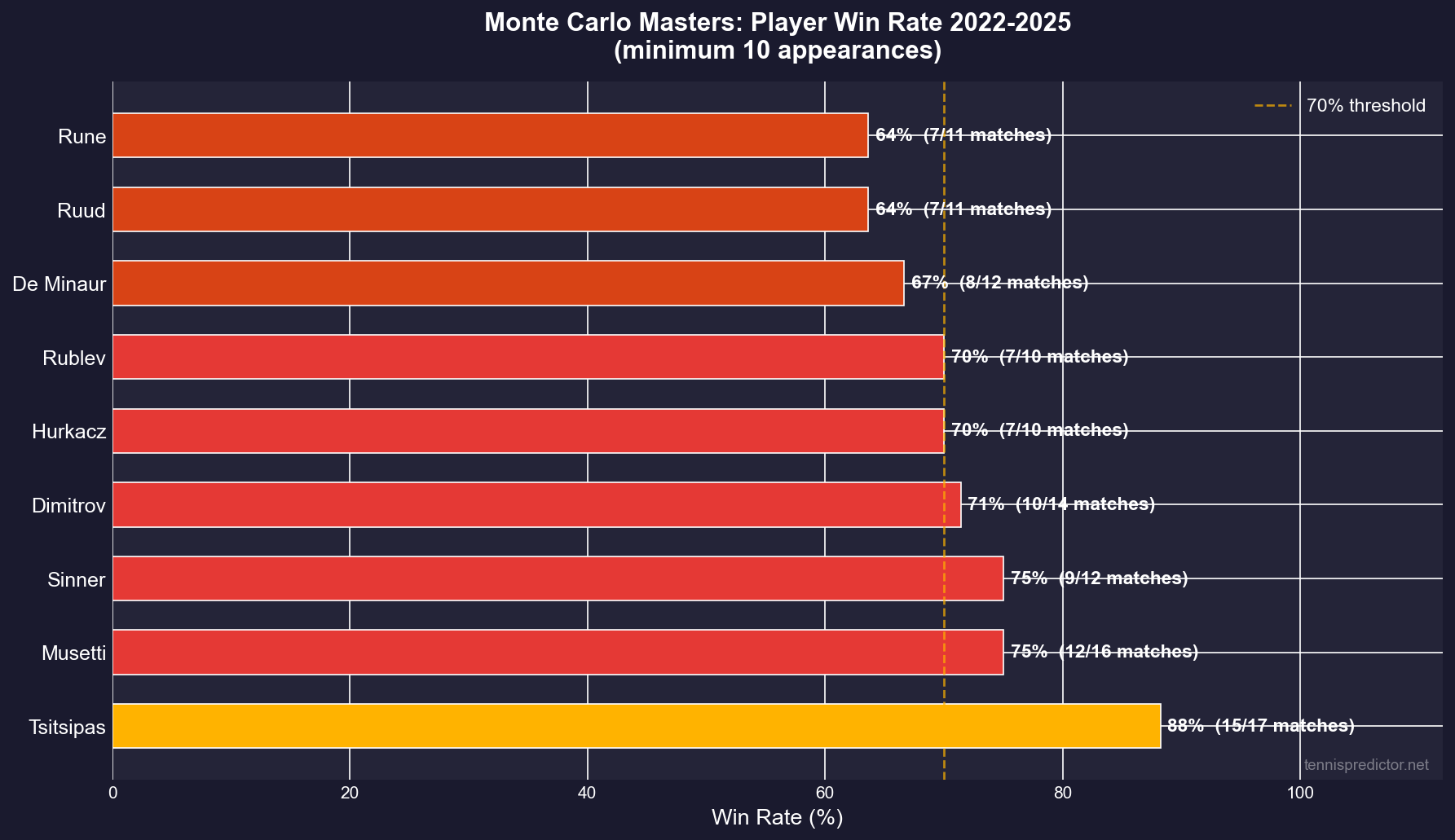
Figure 2: Win rate for players with double-digit Monte Carlo appearances (minimum 10 matches).
Stefanos Tsitsipas is the headline: 15 wins from 17 starts—a level of dominance that shows up in titles (2022, 2024) and deep runs even when he is not the global favourite on paper. Lorenzo Musetti and Jannik Sinner sit together at 75% on fewer attempts; that is useful context when markets overweight name recognition and underweight repeat Monte Carlo performance.
Caveat on small samples: Hubert Hurkacz and Andrey Rublev both sit at 70% on 10 tries—credible, but one deep run moves the line. Use the table to challenge narratives (“he never plays well on clay”) rather than to rank players like-for-like without surface splits elsewhere.
Favourites and upsets: Monte Carlo is “safe” for chalk—in a specific sense
Using the same favourite definition as our clay-wide study (valid odds on both sides), Monte Carlo posts a 69.1% favourite win rate and a 30.9% upset rate across 220 clay matches—nearly identical to Rome (69.9%) and in the same neighbourhood as Barcelona (70.5%).
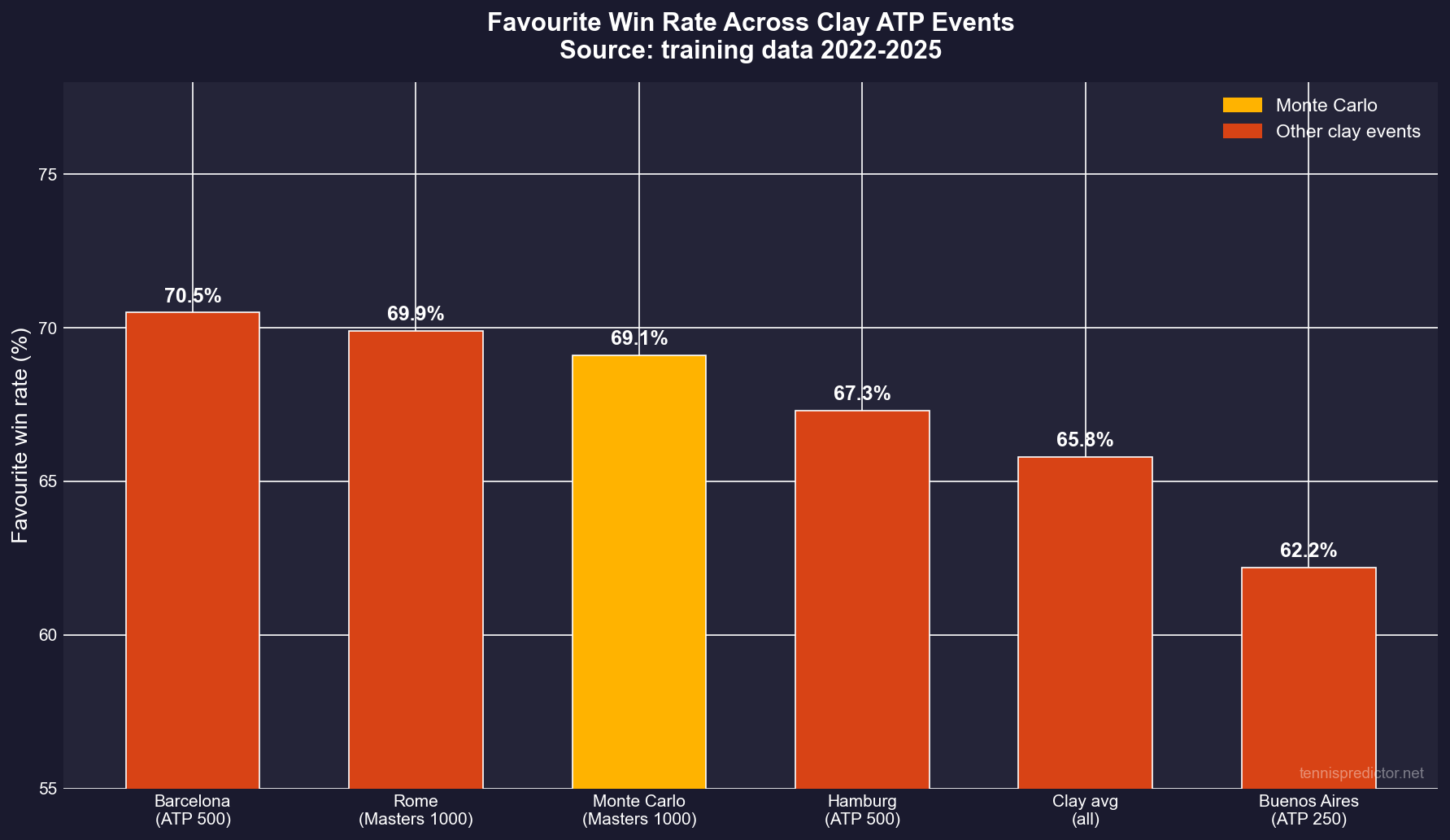
Figure 3: Favourite win rate on clay at selected events (2022–2025, same methodology as our clay guide).
That does not mean Monte Carlo is easy to bet—it means upsets are not unusually frequent compared with other top clay stops. The stress shows up in match length, not in a flood of early-round shock results.
Three-set rate vs other clay events
Monte Carlo’s physical reputation is visible in the deciding-set frequency. In our cross-event comparison (same clay sample as Figure 3), Monte Carlo records the highest three-set rate among the events we chart—42.7% of its 220 matches—ahead of Rio, Hamburg, Rome, and Barcelona in that graphic.
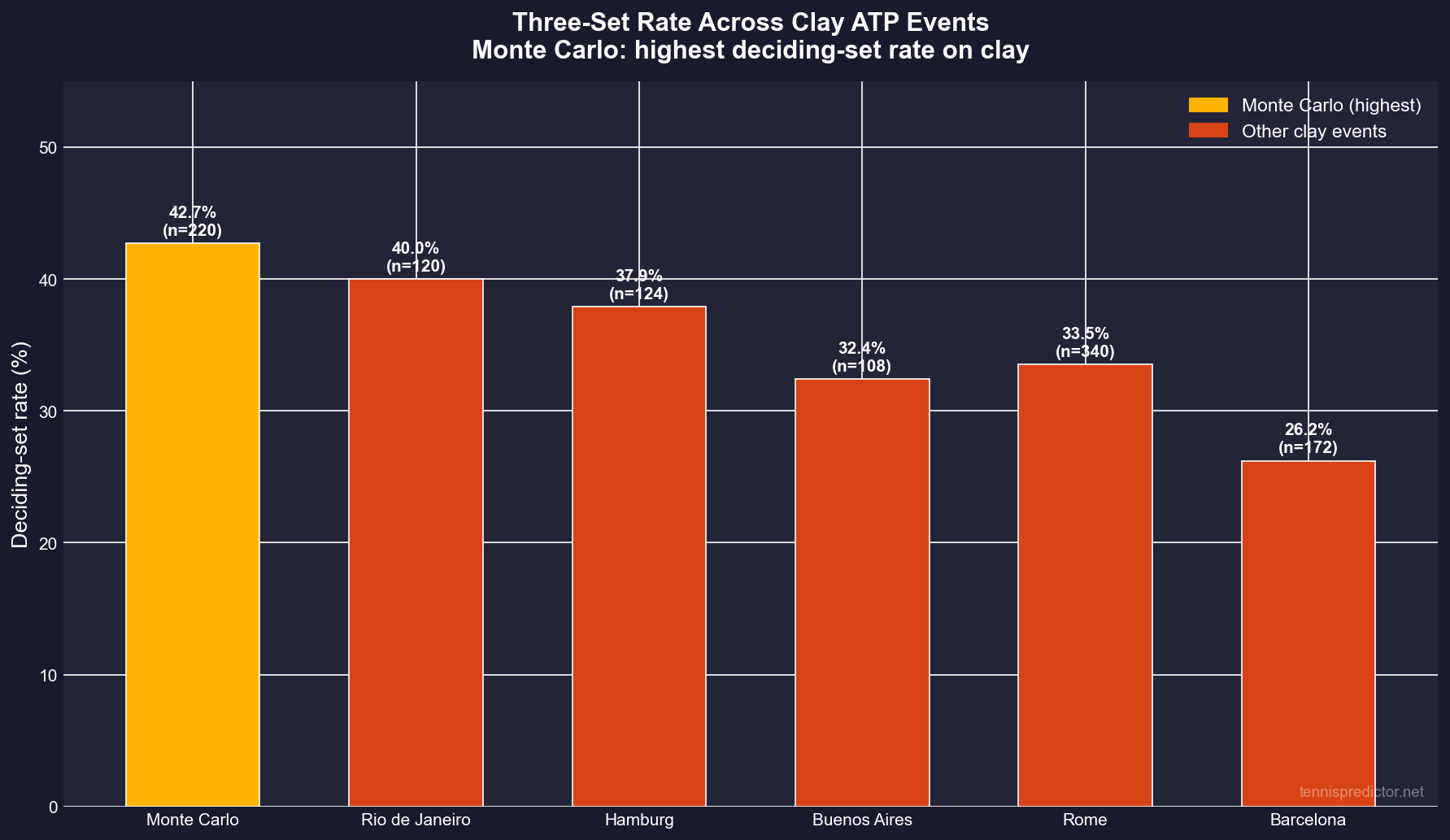
Figure 4: Three-set rate (best-of-three deciding sets) across selected clay tournaments.
Why the grind is real:
- Early clay: footwork and timing are still adjusting.
- Heavy conditions: slow courts and spin lengthen rallies.
- Deep fields: the Masters draw stacks quality early.
Any preview that treats Monte Carlo like a “fast” week is ignoring what the scorelines already say.
How this differs from Madrid (altitude) or Rome (timing)
Madrid is played at altitude—balls fly differently, and favourite paths are shaped by conditions more than by “first week back on dirt.” Rome arrives later in the spring; bodies are more clay-accustomed, and the three-set rate in our charts is typically lower than Monte Carlo’s even though both are elite draws.
Monte Carlo’s uniqueness in this article is not “who wins the most titles in April”—it is that length and late-round physicality show up before the European clay swing has fully settled. That is why the semi-final three-set cluster is analytically interesting even with n = 8.
When you later read Rome previews, expect tighter scorelines on average—not because Rome is “easier,” but because the tour has more reps on dirt by then and fewer players are still adjusting their footwork patterns week to week.
Nationality: clay upbringing still shows up in the odds
This chart is not Monte Carlo–only—it pools all clay ATP events in our 2022–2025 sample. It answers a different question: when a player from a given nation is the pre-match favourite, how often does that side convert?
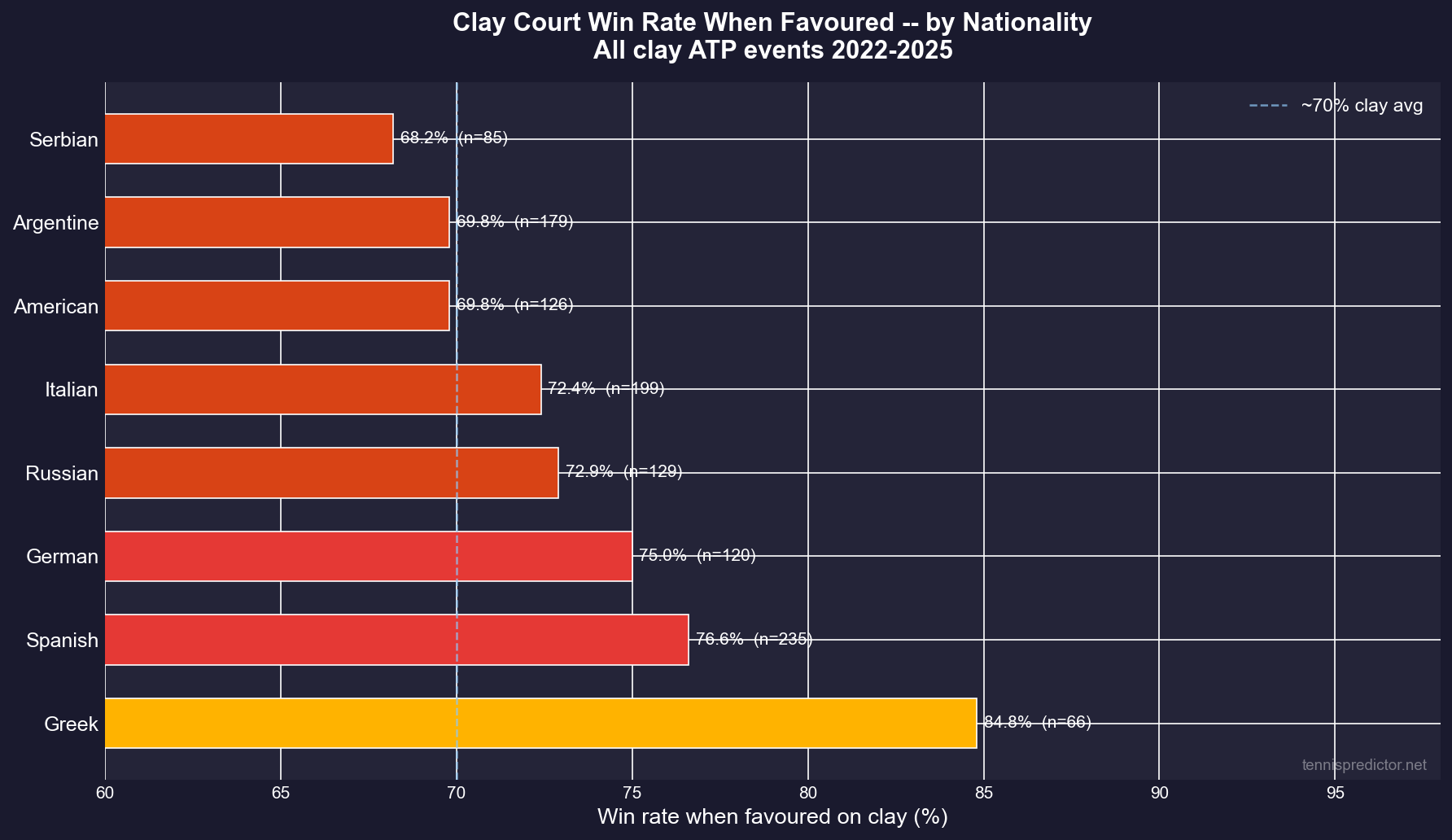
Figure 5: Favourite conversion by nationality on clay (all clay events in sample—use as context, not a stand-alone Monte Carlo rule).
How to use it without fooling yourself:
- Sample sizes swing wildly—Greek numbers are heavily Tsitsipas-driven.
- Spanish and Italian buckets benefit from large n and multiple elite clay voices.
- Treat this as prior, not prophecy: matchup and form still dominate any single April afternoon.
Finals 2022-2025: short points, long memories
Four finals, two of them three sets—exactly the 50% rate you see in the round table when the sample is tiny.
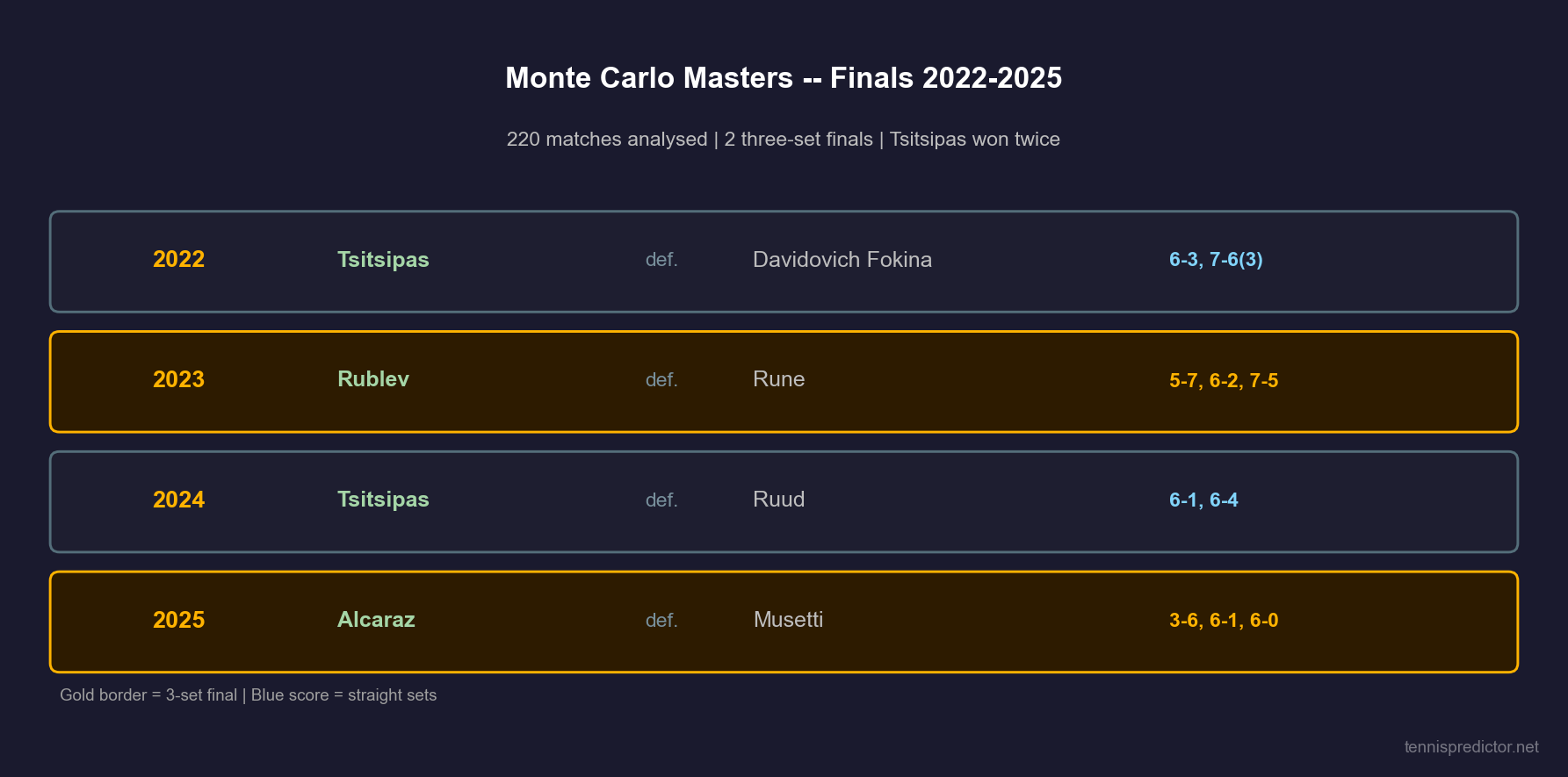
Figure 6: Finals summary—winner, finalist, and scoreline.
Patterns worth remembering:
- Tsitsipas lifted the trophy in 2022 and 2024 with different levels of scoreboard pressure.
- Rublev and Rune produced a 2023 final that behaved like a clay war of attrition.
- Alcaraz vs Musetti in 2025 showed how quickly a final can flip after a slow start on dirt.
Surface transition: what actually matters for pricing
Monte Carlo arrives right after the North American hard-court swing. Players who went deep at Indian Wells or Miami often land in Monaco with short rest and different motor patterns than specialists who have already played South American clay.
Practical angles (no magic, just structure):
- Short rest + deep hard run → higher early-round variance in game totals and live markets.
- South American clay → Monte Carlo → better dirt rhythm, but watch cumulative fatigue.
- Big servers can still win—Hurkacz’s Monte Carlo record is proof—but extended rallies tilt toward movers who slide without panic.
Our live models lean on surface-specific form and recent clay workload rather than treating “Monte Carlo” as a generic tag. You should do the same mentally when you read a price.
Schedule compression: Miami to Monaco
The calendar gap between the Miami Masters and Monte Carlo is short relative to the physical demand of both events. A player who makes a deep Miami run may arrive in Monaco with:
- fewer practice days on clay
- more hard-court neuromuscular habits still active
- elevated accumulated minutes if matches were long
None of that guarantees an upset—but it does shift variance in first-round and second-round markets, where the draw might pair a tired seed against a fresh specialist who lost early in the previous event.
Betting angles that match the data
Markets where this tournament’s shape matters most:
- Total sets / over 2.5 sets — deciding sets are common, especially in the first round and again at QF+.
- Handicaps after a long R1 — a favourite who survives a physical opener may be mis-priced in R2 if the market ignores minutes on legs.
- Live trading after set one — with ~68% first-set-to-match conversion here, comebacks are material, not freak events.
Concrete checklist before you stake:
- Compare opponent rally tolerance on clay—not just ranking. Monte Carlo selects for repeatable execution in long exchanges.
- Check recent match minutes (how many three-setters in the last 14 days). Our tables show three-set tennis is normal here; fatigue compounds.
- For totals, ask whether the price implies a straight-set profile. In R1, that is often optimistic unless the favourite is a dominant clay bully in current form.
Markets where you should stay humble:
- Outright prices already bake in narrative; use player tables to see who actually delivers in Monaco—not just who wins on other surfaces.
- Blind nationality fades — Figure 5 is descriptive clay-wide context, not a cheat code for each matchup.
Misconceptions we can put to rest
“Monte Carlo is the most upset-prone clay stop.”
In our odds-based sample, it is not an outlier for upset frequency—it is an outlier for length and three-set rate.
“If you are a great hard-court player, you can ignore clay prep.”
The year-by-year three-set volatility and the 1R three-set share both argue against that. Clay rewards rhythm, not résumé.
“The final is usually a quick coronation.”
Half of the last four finals in our window needed three sets. Price fatigue and momentum before you assume a routine win.
Reading the draw like a modeller (without pretending certainty)
You cannot know the 2026 path in advance, but you can build a disciplined checklist that mirrors what the historical distributions are already telling you.
Start with length risk, not just names. If your preview assumes a player will reach the weekend without any three-set detours, ask whether that player typically closes quickly on clay or whether the draw is likely to force repeatable physical battles. Monte Carlo’s 42% three-set share is not a trivia fact—it is a prior on variance.
Segment the tournament into three phases:
- Days 1–3 (early rounds): transition noise + draw landmines → higher totals and live volatility.
- Days 4–5 (R16/QF): the field is stronger, but so is clay rhythm → favourites look more like themselves, yet QF still shows 50% three-set history in our pooled table.
- Weekend (SF/F): endurance and mental sharpness dominate; the SF three-set rate is the single loudest structural signal in this article.
Cross-check narratives with the player table. If the market prices a player like a Monte Carlo non-factor but their 10+ match record here is strong, you may be looking at a pricing lag—not a guarantee, but a reason to pause before you follow the crowd.
Finally, separate “elite clay” from “elite everywhere.” Some players translate hard-court Elo into clay success; others need reps. Monte Carlo is precisely the week where that difference shows up early, even when the scoreboard eventually still rewards the better athlete.
Limitations
- Sample size: four editions—great for stability tests, weak for ultra-rare tail events.
- Favourite definition: tied to available odds in our training pipeline; not every historical match has a clean price row.
- No weather or court-speed sensor data—we infer difficulty from results and scorelines, not ball-tracking.
- Draw strength varies by year; a “70% favourite” statement is aggregate, not a guarantee in a #5 vs #40 second-round coin-flip.
- Injuries and withdrawals happen—our historical files reflect completed results, not the counterfactual health of the field on Monday morning.
- Women’s tennis: this dataset is ATP only; do not import these rates into WTA markets without a separate analysis.
Frequently asked questions
How many Monte Carlo matches are in this article?
220 main-draw matches: 55 per year from 2022 through 2025. That is the full four-year window we currently store with complete scores and round labels for this event.
What does “three-set rate” mean here?
A best-of-three match that ends 2–1 in sets—the third set decides the winner. It is the cleanest operational definition for best-of-three tennis when you are thinking about total sets markets.
Is Monte Carlo the most “upset-heavy” clay Masters?
No in our favourite/underdog framing—its upset rate (~31%) is in line with other elite clay events. It is among the most gruelling by three-set frequency.
Why is the semi-final three-set rate so high?
With only eight semi-finals in four years, variance is real—but 75% still signals that late-week Monte Carlo rewards recovery as much as talent. Think of it as selection: by the SF, both survivors are usually strong on clay and still moving well after earlier rounds.
Who has the best raw record in this window?
Stefanos Tsitsipas — 15 wins from 17 Monte Carlo matches in our dataset. That is not a “vibes” pick; it is the highest win percentage among players with 10+ appearances in these four draws.
How does Musetti compare to bigger names?
Lorenzo Musetti went 12–16 (75.0%)—the same win percentage as Jannik Sinner (9–12) in this Monte Carlo slice. Different sample sizes, same headline rate: both are credible Monte Carlo presences in recent years.
What is Monte Carlo’s first-set-to-match conversion?
~68.2% — if you take the first set on Monaco clay, you still lose the match roughly three times in ten. That gap is what makes live markets interesting: the first set is informative, not decisive.
Which year had the most three-set matches?
2025 (29 of 55, 52.7%). 2024 was the quietest (30.9%). Use the year table when someone claims “this event is always” either chaotic or chalky—both happen.
Is the “nationality” chart Monte Carlo–specific?
No. Figure 5 uses all clay ATP events in the sample. Use it as background, not a Monte Carlo-only rule.
How should I use favourite win rate?
As a baseline: Monte Carlo favourites convert at ~69%—helpful for sense-checking prices, useless without player-level context. If your model implies favourites should win 80% of the time in early rounds, you are probably too aggressive unless the draw is extremely top-heavy.
Does this article predict the 2026 draw?
No. It is a historical profile. Always update with current form, injuries, and seedings when the official draw drops.
Where can I see live numbers during the event?
Use our prediction dashboard for ongoing matches—pair it with the structural facts above rather than treating any single percentage as destiny.
Why do you repeat “same methodology as the clay guide” so often?
Because favourite statistics are fragile: if you change how you define the favourite (odds vs seed vs Elo), the percentage moves. We anchor Monte Carlo to the same clay benchmark we publish elsewhere so readers do not mix incompatible definitions.
Related reading
If you are building a season-long clay framework, pair this Monte Carlo profile with the broader surface and set-level work we publish elsewhere. The goal is not to memorise more numbers—it is to connect one tournament’s physical signature (length, late-round grind) to markets that pay you when your assumptions match reality.
These pieces use the same clay-wide methodology for cross-tournament tables or complement set-level thinking:
- Clay court betting guide: how to win during Roland Garros season
- The decisive set: third set & fifth set statistics that matter for bettors
- How our AI predicts tennis matches with 70%+ accuracy
Data: 220 Monte Carlo ATP matches (2022–2025) from the tournament results cache; cross-event favourite and three-set benchmarks align with the same clay aggregation published in our Roland Garros season analysis. Percentages are computed from those sources—no illustrative or invented scores. If you spot a label mismatch in a raw score string from an external feed, exclude that edge case from first-set maths rather than forcing a guess—transparent drops beat fake precision.


