Hubert Hurkacz: the big-serving grass threat with a QF ceiling and a Djokovic problem
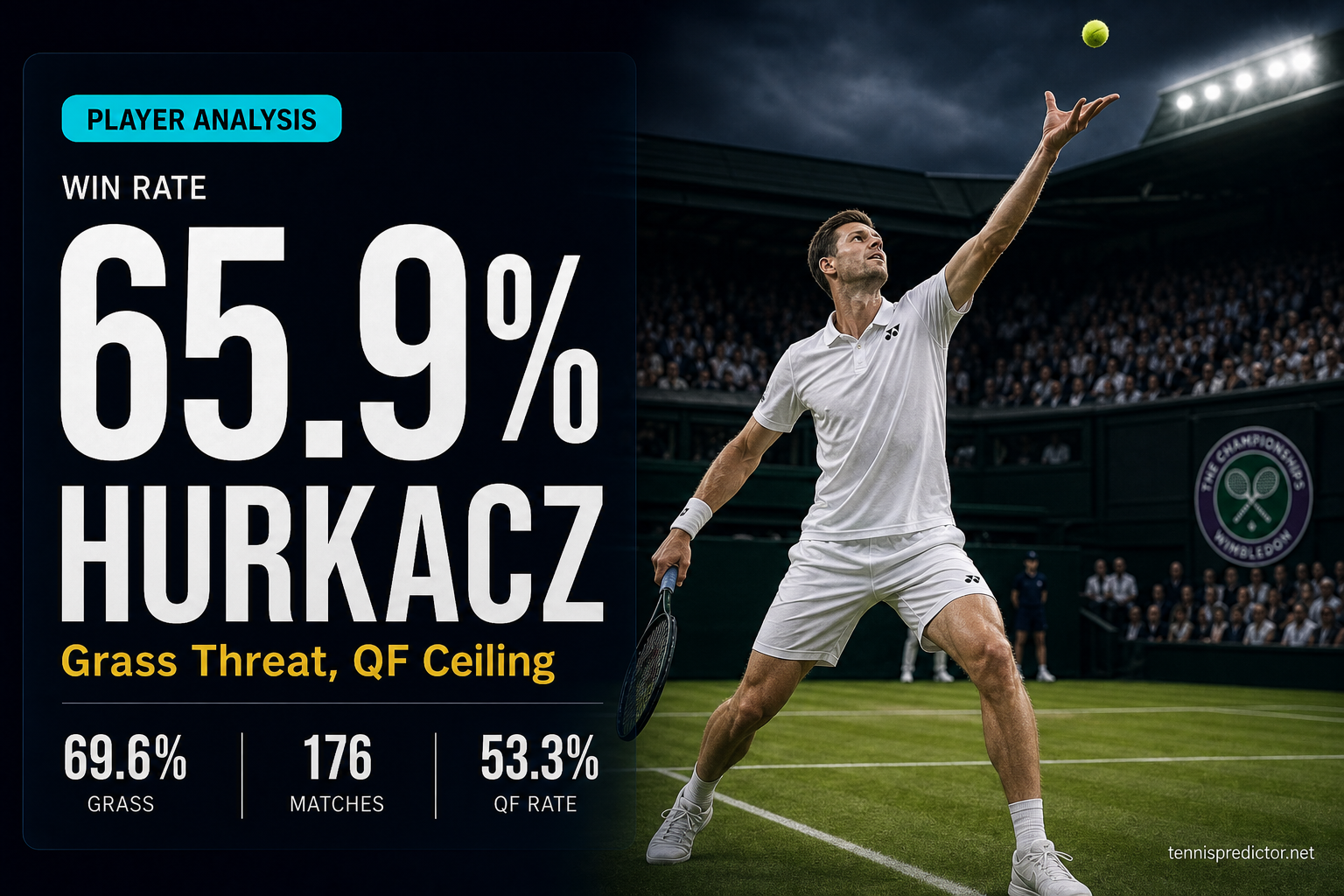
Hubert Hurkacz has played 176 ATP matches from 2022 to 2025 at a 65.9% overall win rate — a figure that obscures a sharp and sustained decline from his peak. In 2022 he was one of the most dominant players in the dataset at 81.8% over 33 matches. By 2024 the rate had fallen to 62.5%, and 2025's mid-season snapshot shows 60.0% over just 10 matches. The grass-court component of his game remains elite (69.6%), but the declining trend and a collection of brutal elite H2H records define where the market should and should not trust him.
Key metrics at a glance
| Metric | Value |
|---|---|
| Overall win rate | 65.9% |
| Dataset rank (end of period) | 32 |
| Matches analysed | 176 (2022–2025) |
| Best surface | Grass — 69.6% |
| Grand Slam win rate | 63.2% |
| Lowest surface | Indoors — 64.5% |
| As market favourite | 73.4% |
| As underdog | 34.8% |
Hurkacz's year-by-year record
| Year | Matches | Wins | Win rate |
|---|---|---|---|
| 2022 | 33 | 27 | 81.8% |
| 2023 | 23 | 17 | 73.9% |
| 2024 | 24 | 15 | 62.5% |
| 2025 | 10 | 6 | 60.0% |
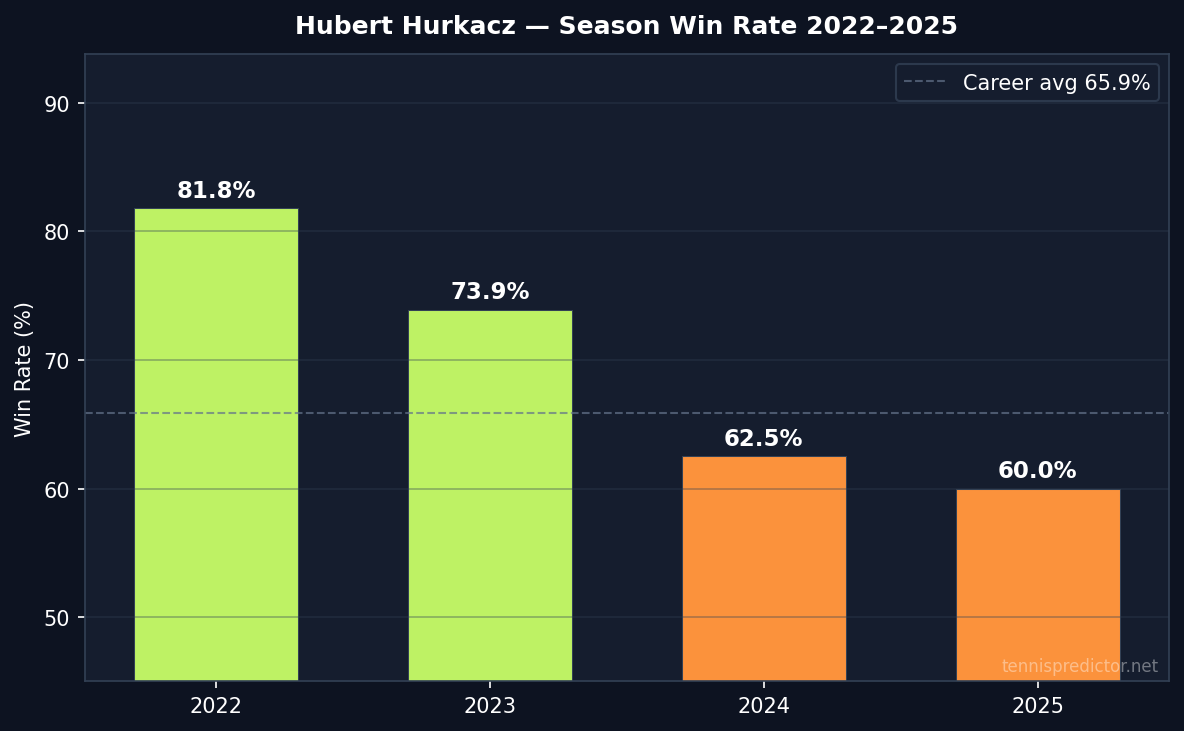
Win rate by season, Hubert Hurkacz, 2022–2025. Source: ATP match data via tennispredictor.net
The 2022 figure of 81.8% was one of the highest single-season rates in the dataset outside the Big Three era. Hurkacz won the Miami Open, reached multiple finals, and had fully integrated his serve-and-forehand dominance. Each subsequent year has brought a step-down: 73.9%, 62.5%, and a 2025 partial season at 60.0%. His snapshot rank of 32 reflects the points drop from missed tournaments in 2025 (injury-related schedule management). The 2024–2025 data is the most relevant baseline for current betting.
Surface breakdown: grass leads, all surfaces close
| Surface | Matches | Win rate |
|---|---|---|
| Grass | 23 | 69.6% |
| Clay | 47 | 66.0% |
| Hard | 75 | 65.3% |
| Indoors | 31 | 64.5% |
| Grand Slam | 38 | 63.2% |
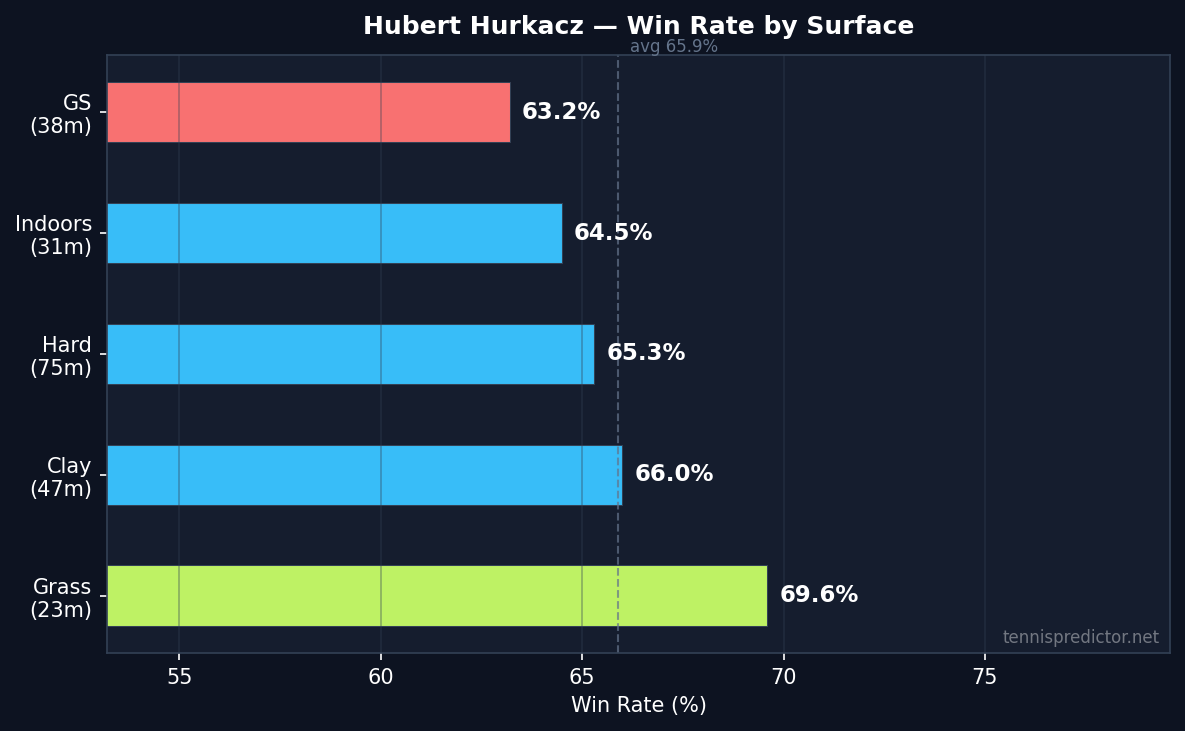
Win rate by surface, Hubert Hurkacz, 2022–2025. Source: ATP match data via tennispredictor.net
Unlike most specialists, Hurkacz has a relatively narrow surface range — only 6.4 points between his best (grass, 69.6%) and worst (GS, 63.2%) figures. He is an effective all-court player with a slight grass premium driven by his serve dominance on fast grass courts.
The clay figure (66.0%) is above his overall average, which is unusual for a player without heavy clay training. His ability to generate pace from the baseline transfers to clay in limited rally scenarios. However, the Grand Slam figure (63.2% over 38 matches) is below his overall average, suggesting that in best-of-five settings, the elite opponents at big events tend to expose his patterns more effectively than in shorter formats.
Round-by-round: dominant early, QF the ceiling
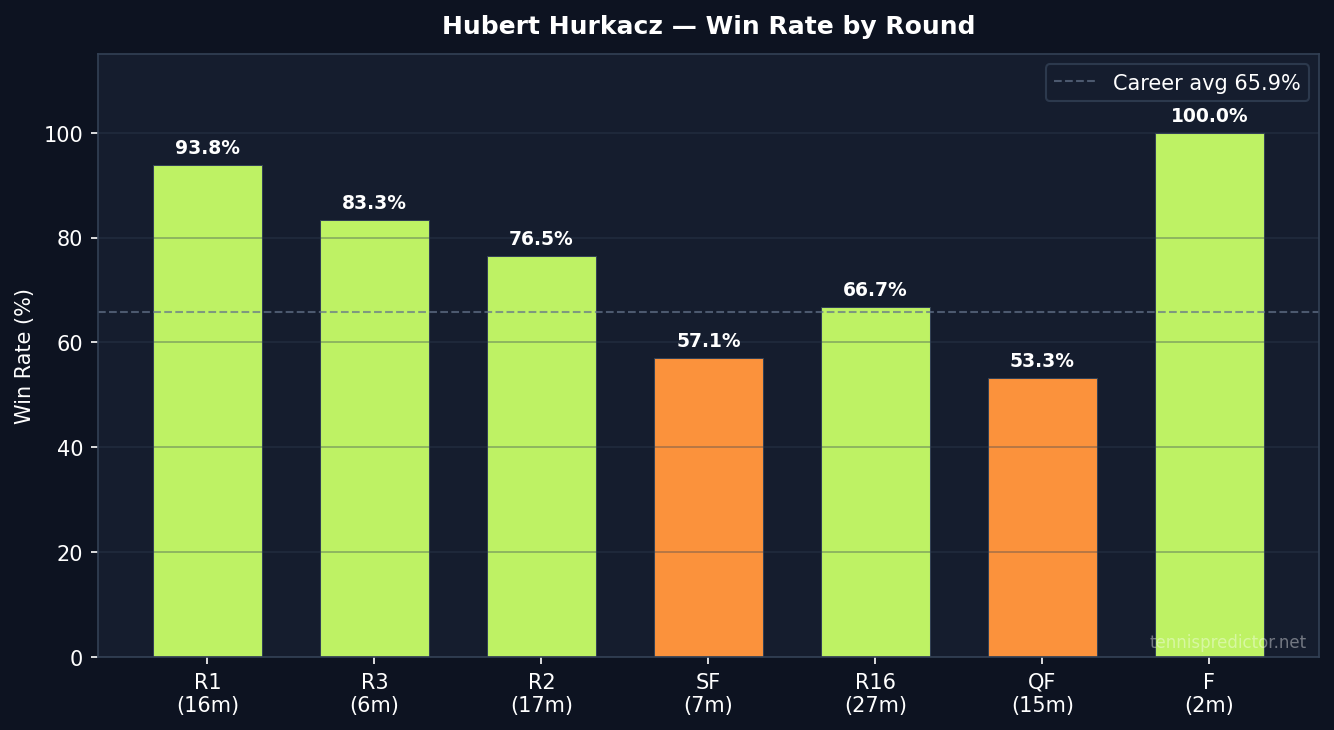
Win rate by round, Hubert Hurkacz, 2022–2025. Source: ATP match data via tennispredictor.net
| Round | Matches | Win rate |
|---|---|---|
| R1 | 16 | 93.8% |
| R3 | 6 | 83.3% |
| R2 | 17 | 76.5% |
| R16 | 27 | 66.7% |
| SF | 7 | 57.1% |
| QF | 15 | 53.3% |
| Final | 2 | 100.0% |
Hurkacz's early-round conversion is exceptional: 93.8% in R1, 76.5% in R2, 83.3% in R3. He reaches the QF at a high rate (15 QF appearances in the dataset) but converts only 53.3% of those matches. The SF (57.1%, 7 matches) is modestly better, while the Final sample (2 matches, both wins) is too thin to interpret.
The QF at 53.3% is functionally identical to a coin-flip — consistent with the reality that QF opponents at top-level events are almost exclusively from the top-20 where his H2H record varies sharply.
H2H against the elite
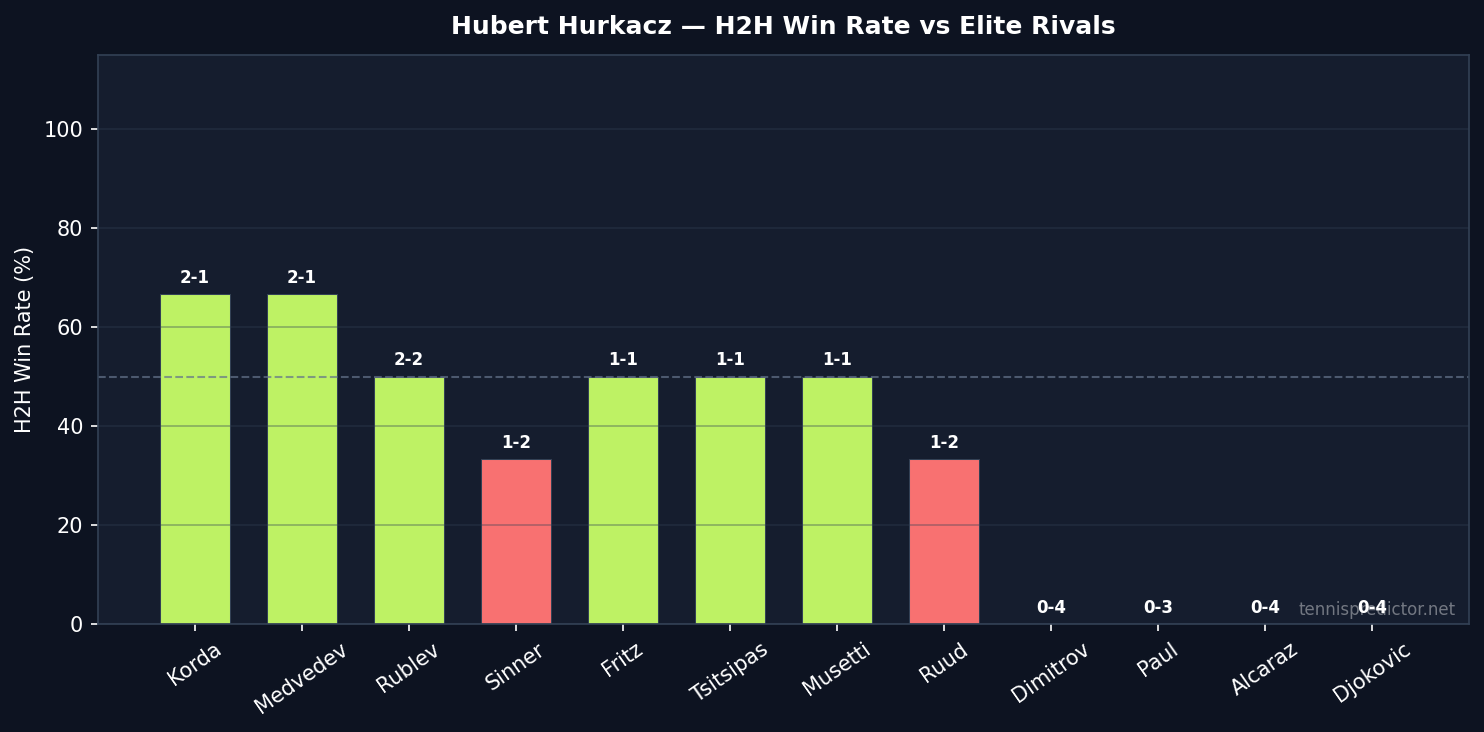
H2H win rate vs rivals with 2+ meetings, Hubert Hurkacz, 2022–2025. Source: ATP match data via tennispredictor.net
| Opponent | Record | H2H win rate |
|---|---|---|
| Korda | 2–1 | 66.7% |
| Medvedev | 2–1 | 66.7% |
| Rublev | 2–2 | 50.0% |
| Sinner | 1–2 | 33.3% |
| Fritz | 1–1 | 50.0% |
| Ruud | 1–2 | 33.3% |
| Paul | 0–3 | 0.0% |
| Dimitrov | 0–4 | 0.0% |
| Alcaraz | 0–4 | 0.0% |
| Djokovic | 0–4 | 0.0% |
The bottom of the table contains four separate players Hurkacz has never beaten in 15 combined meetings: Djokovic (0–4), Alcaraz (0–4), Dimitrov (0–4), and Paul (0–3). The Djokovic and Alcaraz results reflect the same elite ceiling seen across most top-20 players. The Dimitrov (0–4) and Paul (0–3) results are more surprising: both players are ranked below Hurkacz in the snapshot and yet have consistently solved his patterns across multiple encounters and surfaces.
Paul at 0–3 is particularly relevant for American events where their draws frequently intersect. The market prices those matchups based on rankings; the H2H says Hurkacz has not found answers for Paul's variety.
As market favourite vs underdog
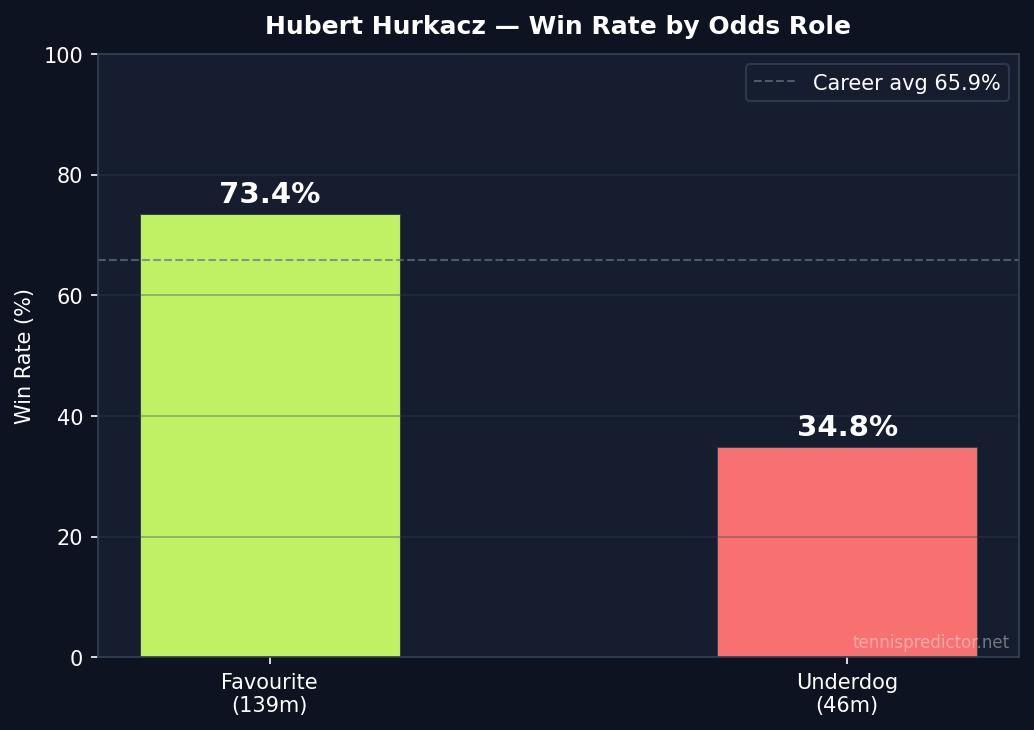
Win rate as market favourite vs underdog, Hubert Hurkacz, 2022–2025. Raw tournament cache. Source: tennispredictor.net
As favourite (139 matches): 73.4% — standard for a top-15/20 player. As underdog (46 matches): 34.8% — one of the lower underdog rates in the dataset. When the market rates Hurkacz as inferior to his opponent, he only wins 1 in 3 of those matches, confirming the structural ceiling pattern.
What the betting market misses about Hurkacz
The Dimitrov and Paul anomaly. 0–4 against Dimitrov and 0–3 against Paul are the most actionable signals in the dataset for daily betting. These are players typically priced at rough parity or slight underdogs against Hurkacz; the actual H2H provides strong grounds to flip that pricing.
The grass premium is real but small. 69.6% on grass is his best surface and valid for backing him in Wimbledon draws through the QF. However, the surface premium is only 3.7 points above his overall average — meaningfully smaller than Fritz's or Ruud's surface premiums. Do not over-weight the grass signal.
The declining trend matters. The market still partially prices Hurkacz at 2022 levels (when he was 81.8%). The 2024 and 2025 figures (62–63%) are the correct current baseline.
How our model treats Hurkacz
- Declining form adjustment — 2024–2025 rolling windows are the primary baseline; model adjusts downward from the career 65.9% figure
- Grass boost — 69.6% triggers upward adjustment for Wimbledon and grass events
- Dimitrov, Paul, Djokovic, Alcaraz H2H overrides — zero wins in those H2H records are applied as strong negative signals
- GS penalty — 63.2% Grand Slam rate vs 65.9% overall triggers a small downward adjustment in Slam scenarios
Frequently asked questions
What is Hurkacz's overall win rate?
65.9% across 176 matches from 2022 to 2025. His 2022 peak of 81.8% is the highest of any player in the Batch 2 dataset; his current 62–63% range is the appropriate baseline for 2025–2026 betting.
Which surface is best for Hurkacz?
Grass at 69.6% over 23 matches — his highest surface rate and the anchor for his Wimbledon value. Clay (66.0%) and hard (65.3%) are within 4 points of his overall average.
Who has the best H2H record against Hurkacz?
Djokovic, Alcaraz, and Dimitrov (all 4–0) and Paul (3–0) have never been beaten by Hurkacz in this dataset. These are four separate players across different playing styles.
Why is his underdog rate so low at 34.8%?
His H2H records confirm the pattern: when the market identifies him as inferior to his opponent, that assessment is usually accurate and he only overcomes it 1 in 3 times.
When is Hurkacz worth backing?
In the first three rounds of Wimbledon and other grass events (93.8% R1 conversion, genuine grass premium). Fade him against Djokovic, Alcaraz, Dimitrov, and Paul at any stage, and at any event priced based on his 2022 ranking rather than 2024–2025 form.
Conclusion
Hurkacz's profile is best understood through the lens of his 2022 peak and the four-year decline that followed. On grass, in the first half of draws, he remains among the most reliable early-round bets in the dataset. The ceiling is well-documented: four players with 0–3 or 0–4 records against him, declining rolling form windows, and a QF conversion rate of 53.3% that turns late-draw predictions into near coin-flips. Back him early on grass; fade him in the second week against familiar opponents.
For the contrast of a player with a consistent grass ceiling vs hard-court strength, see the Fritz analysis. For Wimbledon context, see our grass court specificity guide.
All statistics sourced from ATP match data 2022–2025. ATP Tour events only. Data extracted June 2025.
See today's match predictions with confidence scores and value signals.
View Live Predictionsarrow_forwardRelated Articles
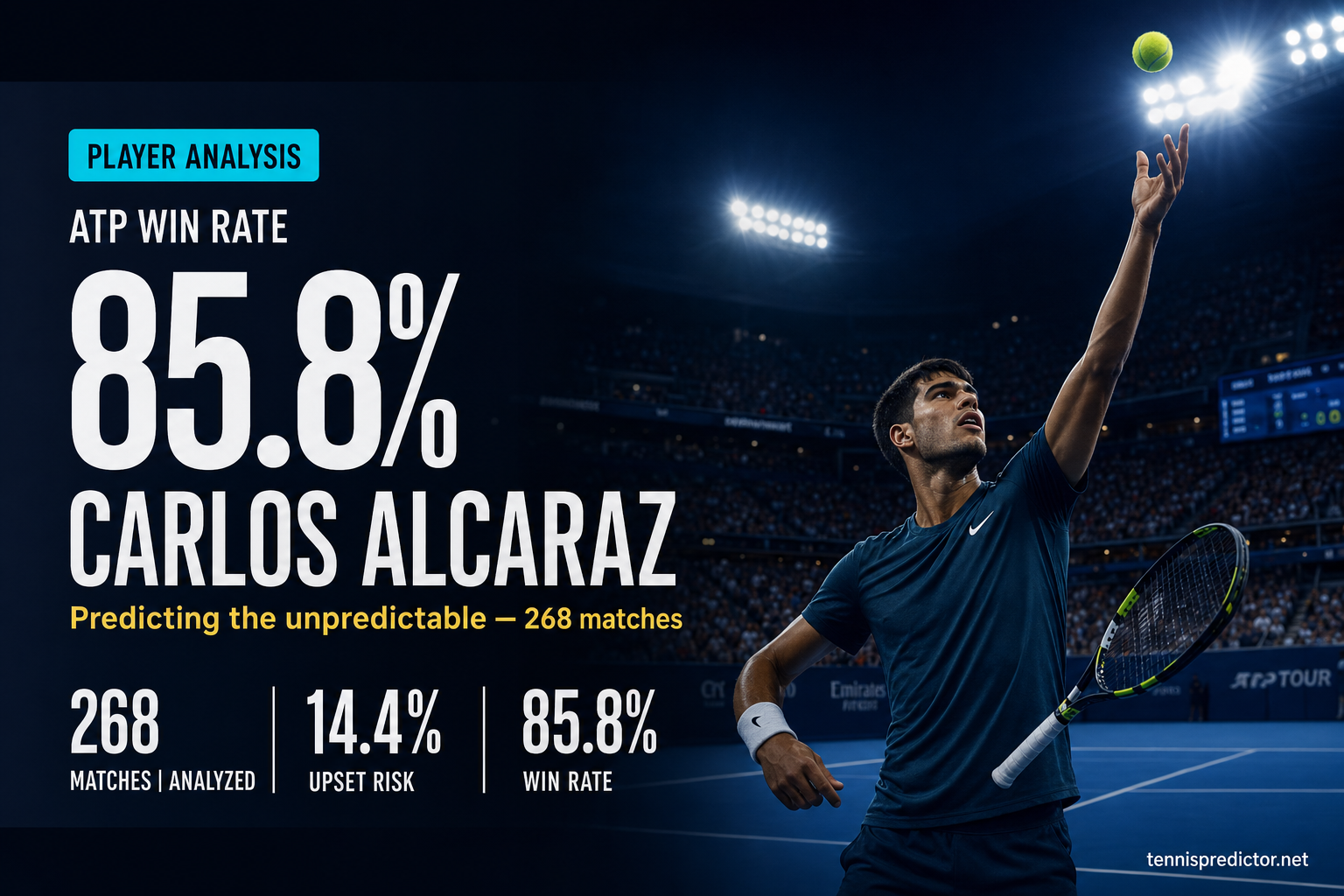
Carlos Alcaraz ATP analysis: predicting the unpredictable
Carlos Alcaraz has played 298 ATP main-draw matches from 2022–2026 at a 85.9% win rate. Data story: elite win rate with real favourite-upset risk that markets compress.
September 8, 2026 · 14 min read
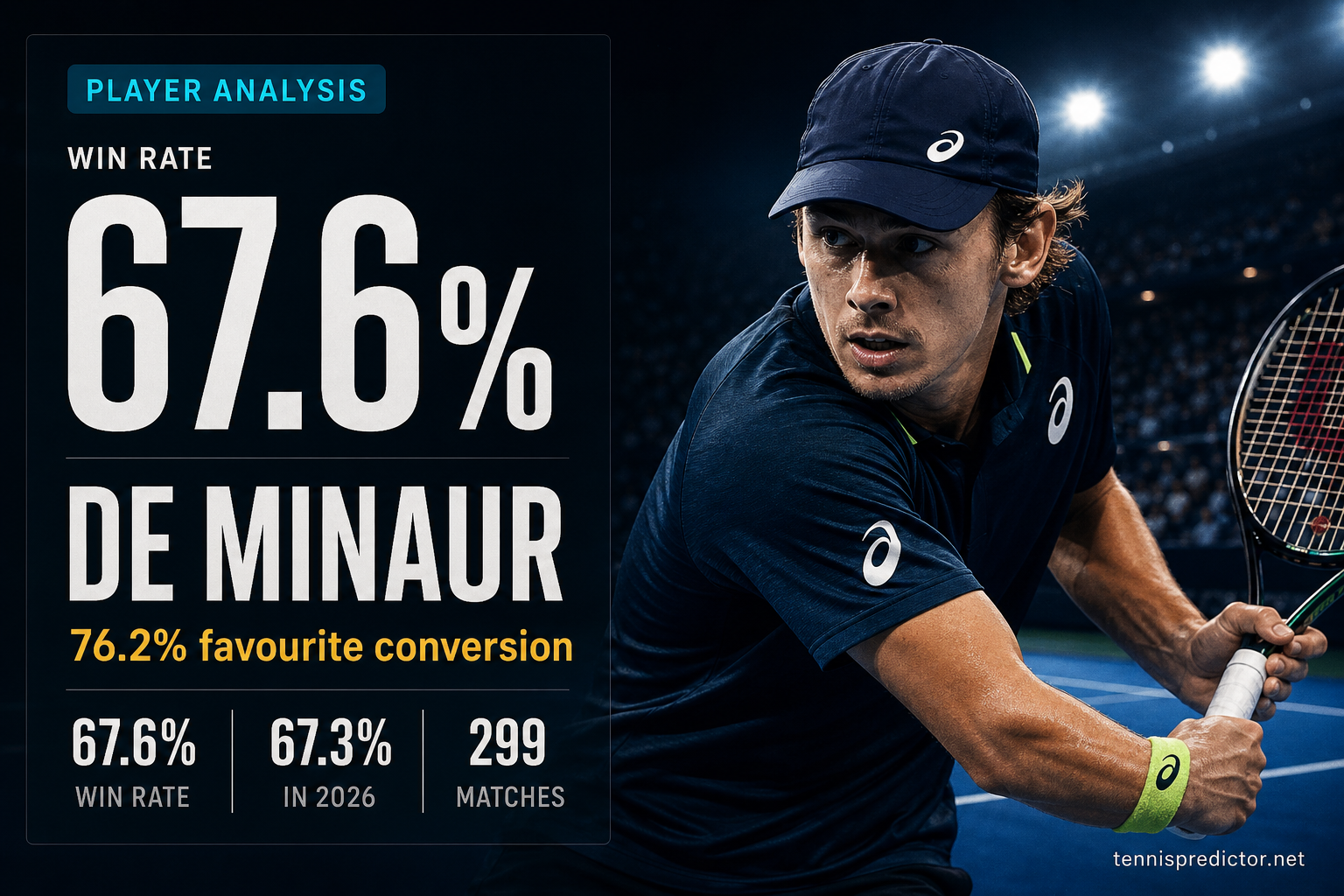
Alex de Minaur ATP analysis: top-20 profile and betting read
Alex de Minaur has played 299 ATP main-draw matches from 2022–2026 at a 67.6% win rate. Data story: favourite conversion at 76.2% (23.8% upset risk).
September 8, 2026 · 12 min read
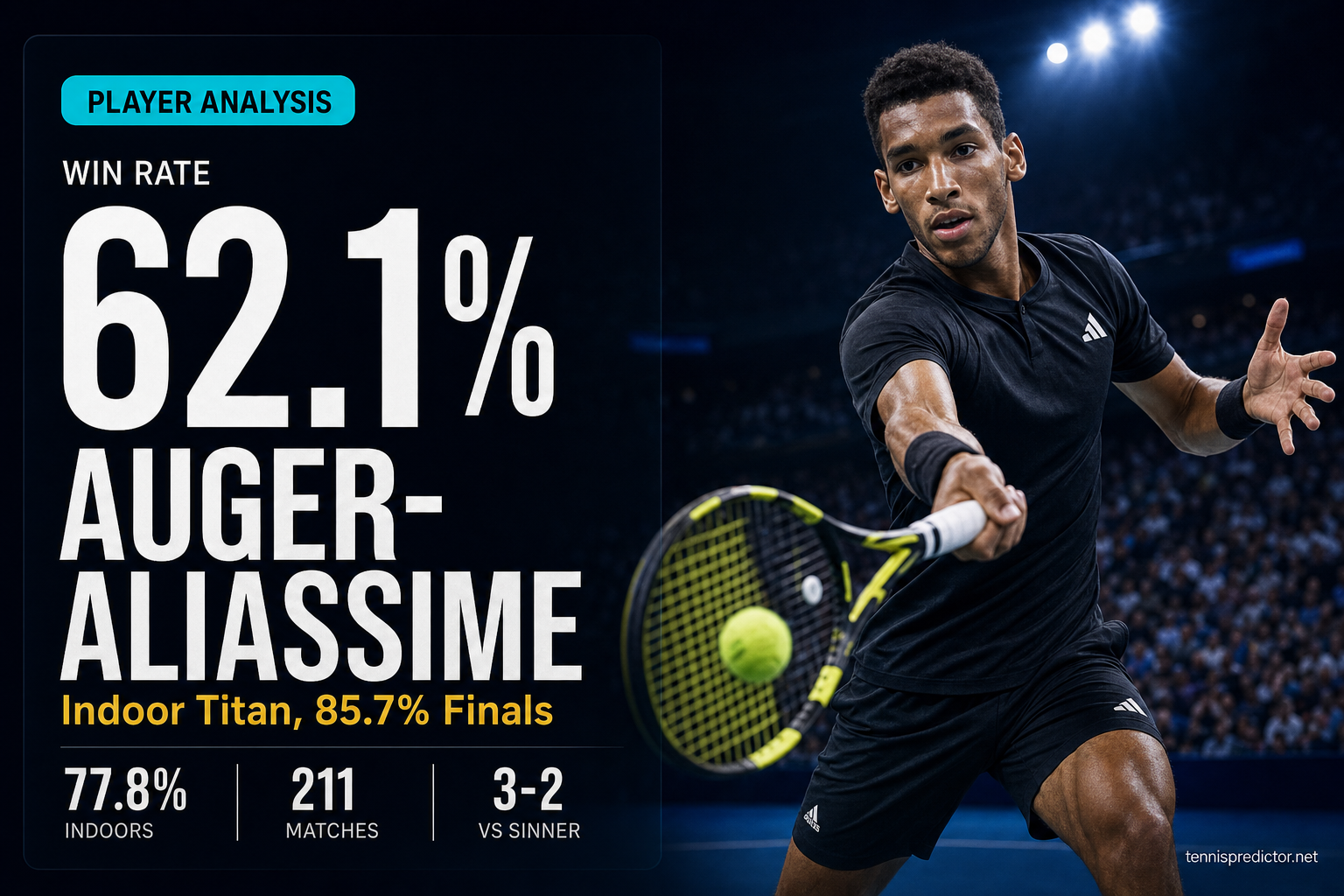
Felix Auger-Aliassime ATP analysis: top-20 profile and betting read
Felix Auger-Aliassime has played 278 ATP main-draw matches from 2022–2026 at a 63.7% win rate. Data story: Indoors edge (78.9%) vs Grass at 54.5%.
September 8, 2026 · 12 min read
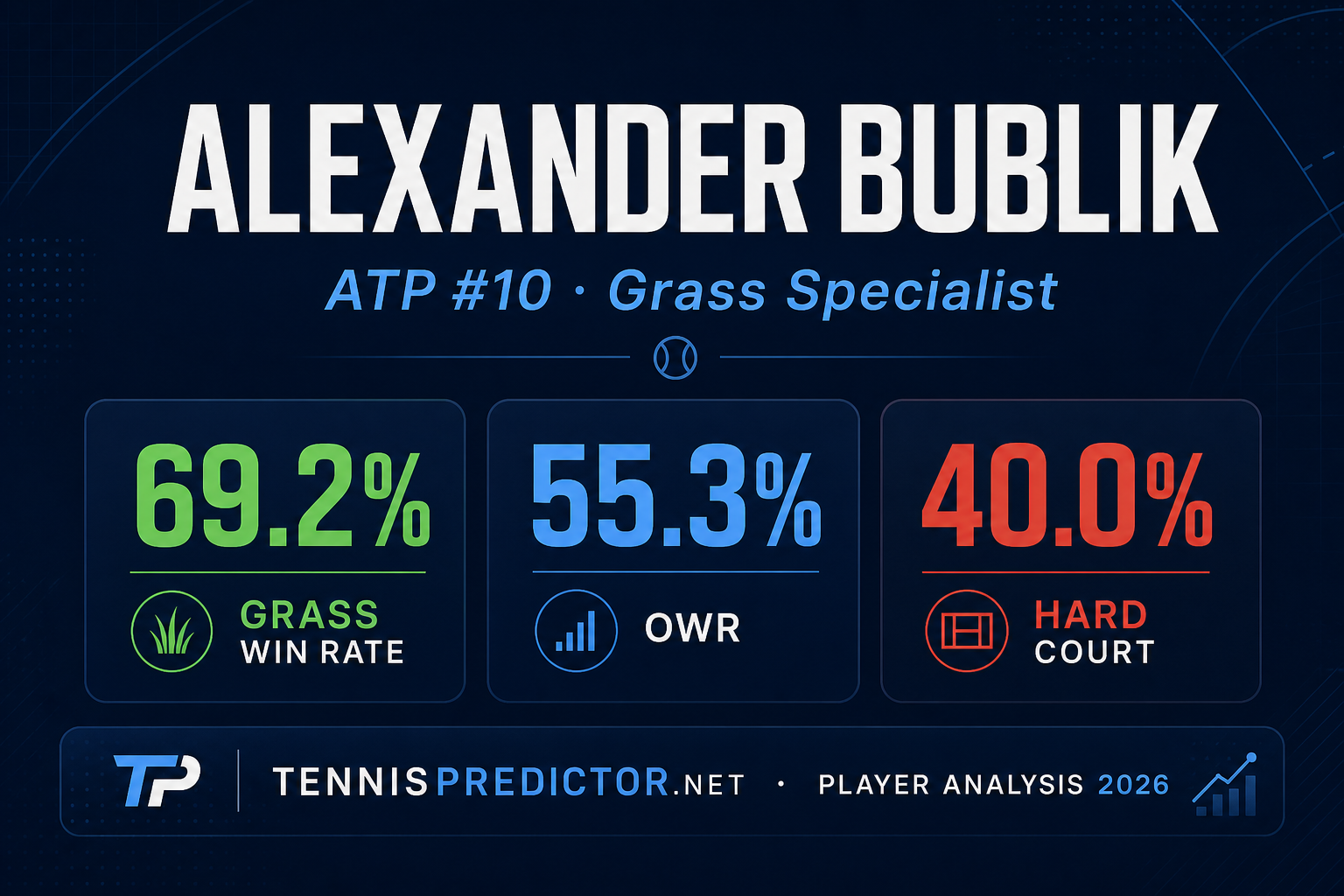
Alexander Bublik ATP analysis: top-20 profile and betting read
Alexander Bublik has played 238 ATP main-draw matches from 2022–2026 at a 56.3% win rate. Data story: Grass edge (68.0%) vs Hard at 46.1%.
September 8, 2026 · 12 min read