
Carlos Alcaraz: predicting the unpredictable
Published: April 4, 2026
Category: Player Analysis
Reading Time: 18 minutes
Tags: Carlos Alcaraz, player analysis, tennis statistics, betting strategy, ATP Tour
Carlos Alcaraz is the most exciting player in men's tennis — and arguably the most difficult to price. At just 22 years old, he has already won four Grand Slam titles, displayed court-covering athleticism that redefines the sport, and produced moments of brilliance that leave opponents and analysts alike speechless.
But brilliance and predictability rarely go hand in hand. Markets often compress his odds because of narrative and star power, while the underlying data show surface-specific and stage-specific variance that generic “he’s world number one” thinking misses.
We analyzed 268 matches played by Alcaraz between 2022 and 2025 — every surface, every tournament tier, every round we have on record — to answer the question bettors and fans ask constantly: Can you actually predict Carlos Alcaraz in a way that survives contact with real odds?
The short answer: yes, if you condition on context. The longer answer is what follows: tables, five charts, upset behaviour as a pre-match favourite, and practical staking discipline — including when to treat him like a coin flip (hello, Jannik Sinner).
Key metrics at a glance
These figures come from our tournament match database (all Alcaraz matches we hold for 2022–2025, with results, surfaces, rounds, and odds where available). They are the backbone of every percentage quoted below.
| Metric | Value | Notes |
|---|---|---|
| Matches (2022–2025) | 268 | Full sample in database |
| Wins / losses | 230 / 38 | Overall 85.8% win rate |
| Best surface (win rate) | Grass 91.9% | 37 matches |
| Weakest surface (win rate) | Indoor hard 62.5% | 8 matches — small sample |
| Grand Slam vs ATP Tour | 89.4% vs 84.2% | 85 Slam matches, 183 Tour |
| Losses when pre-match favourite | 28 of 195 priced favourite roles | 14.4% upset rate in that subset |
| Sets going three or more | 53.4% of matches | Drives game-total variance |
Why "elite win rate" still clashes with betting reality
A high win percentage solves a different problem than positive expected value. Bookmakers know Alcaraz wins most weeks; that information is baked into short prices. What remains for the bettor is whether the posted odds underestimate risk on a specific day — indoor schedule, three matches in a row, an opponent who neutralises his forehand, or a body issue that the market has only partly adjusted.
That is where the splits in this article earn their keep. If you only remember one concept, remember this: Alcaraz’s 85.8% career sample win rate is not the same as “85.8% in the match I am about to bet.” Conditional win rates by surface and round move those baselines by double digits in some cases (for example indoor hard versus grass). Models that do not surface-condition or stage-condition aggressively will systematically overstate confidence — which is exactly how accounts bleed despite “always picking the better player.”
We connect these ideas to broader tour dynamics in our machine learning vs statistical models breakdown: different engines weight recent form, surface, and head-to-head differently. For a player with Alcaraz’s profile, mis-weighting one context can flip a bet from marginal value to negative EV even when the headline pick stays the same.
The raw numbers: an elite win rate with hidden volatility
Let's start with the headline: over 268 matches, Alcaraz won 230 of them — an 85.8% win rate. That number places him among the most dominant players of this era.
But averages can mask the full picture.
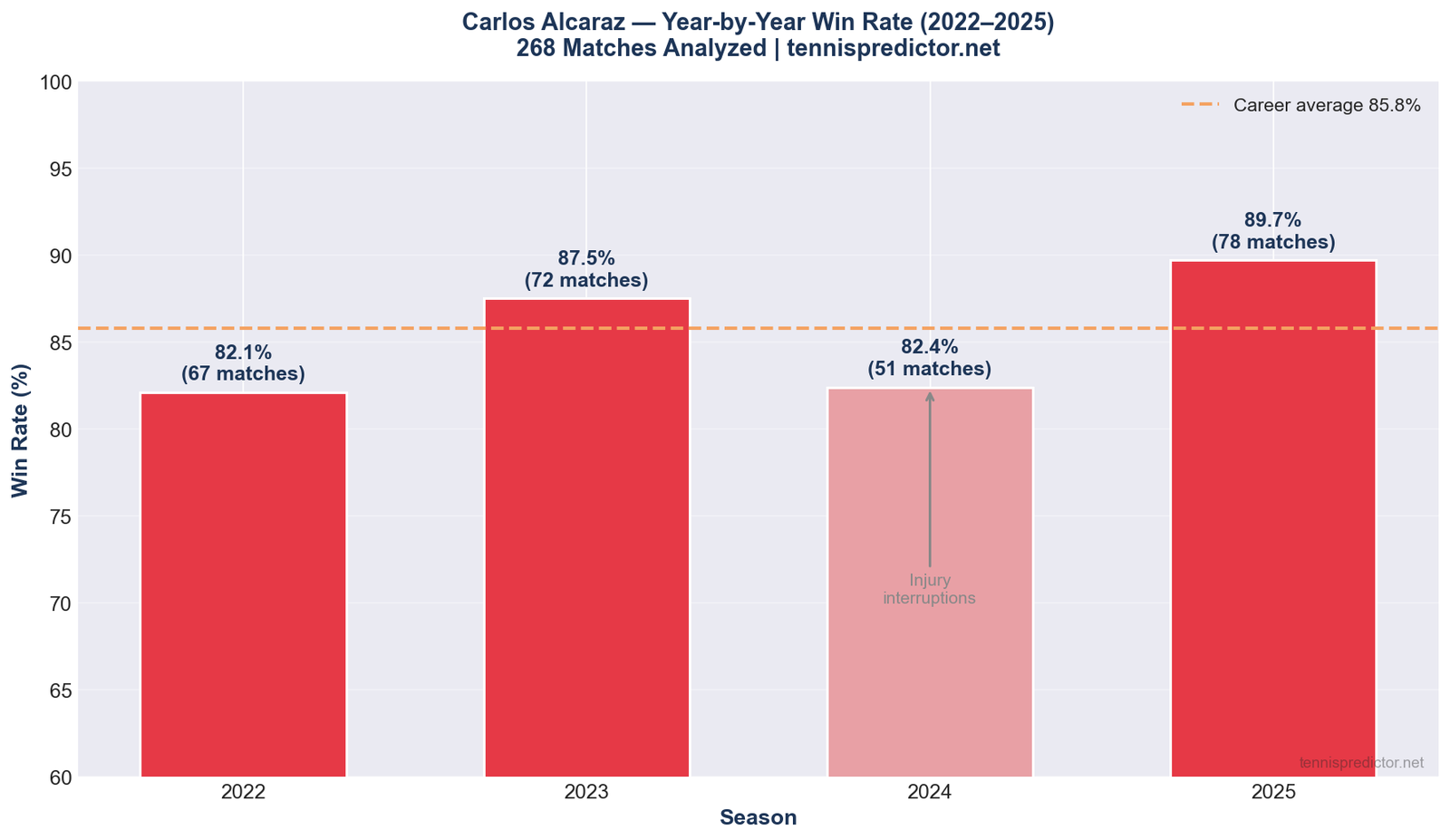
Figure 1: Year-by-year win rate and match volume.
His year-by-year breakdown tells a story of development with real fluctuation:
- 2022: 82.1% across 67 matches — his breakout season, winning the US Open at 19
- 2023: 87.5% across 72 matches — his peak consistency, adding Wimbledon to his trophy cabinet
- 2024: 82.4% across 51 matches — injury interruptions caused a dip, fewer matches played
- 2025: 89.7% across 78 matches — a return to form and career-best efficiency
That dip to 51 matches in 2024 is not a minor detail. Alcaraz missed significant time due to physical setbacks — a recurring theme that directly impacts both his results and betting predictability. When healthy, he trends upward. When managing injury, variance spikes sharply.
This is your first key insight for betting: Alcaraz's availability matters as much as his form.
Surface analysis: where Alcaraz is most dominant
One of the most surprising findings in our dataset: Alcaraz's best surface is grass, not clay.
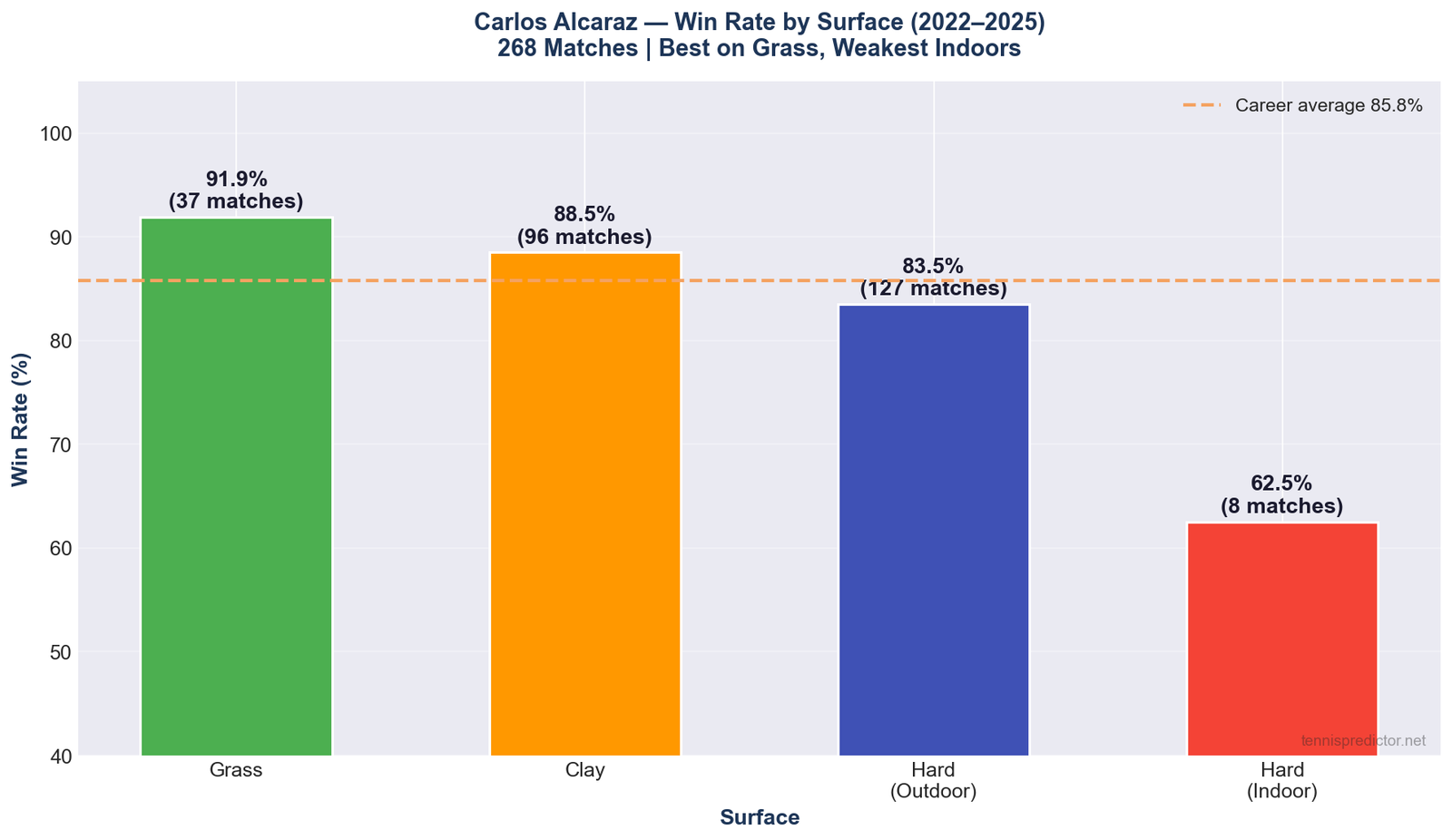
Figure 2: Win rate by surface (outdoor hard, clay, grass, indoor hard).
The numbers across 268 matches:
Grass (37 matches):
- Win rate: 91.9%
Clay (96 matches):
- Win rate: 88.5%
Hard Court — Outdoor (127 matches):
- Win rate: 83.5%
Hard Court — Indoor (8 matches):
- Win rate: 62.5%
The grass dominance makes sense in retrospect — Alcaraz's game (explosive first strike, heavy topspin that sits up on grass, elite net play) translates exceptionally well to the surface. He won back-to-back Wimbledon titles in 2023 and 2024, rarely looking troubled.
The indoor hard court number is fascinating and commercially underreported. In 8 indoor hard matches in our dataset, he won 5 (62.5%). Treat this as a directional signal, not a law: eight matches is a thin slice — one more win would jump the rate to 75%. Still, the gap versus his outdoor and clay numbers is large enough that models and bettors should not price him like a generic world-number-one indoors.
Betting implication: Be sceptical of very short prices on indoor hard unless the draw and matchup data strongly support it. On grass, historical dominance backs more aggressive positions — always within your bankroll rules.
Grand Slam vs ATP Tour: a performance gap that matters
The roadmap for predicting Alcaraz hinges on understanding when his elite level shows up consistently. Our data reveals a clear and statistically meaningful gap between tournament tiers.
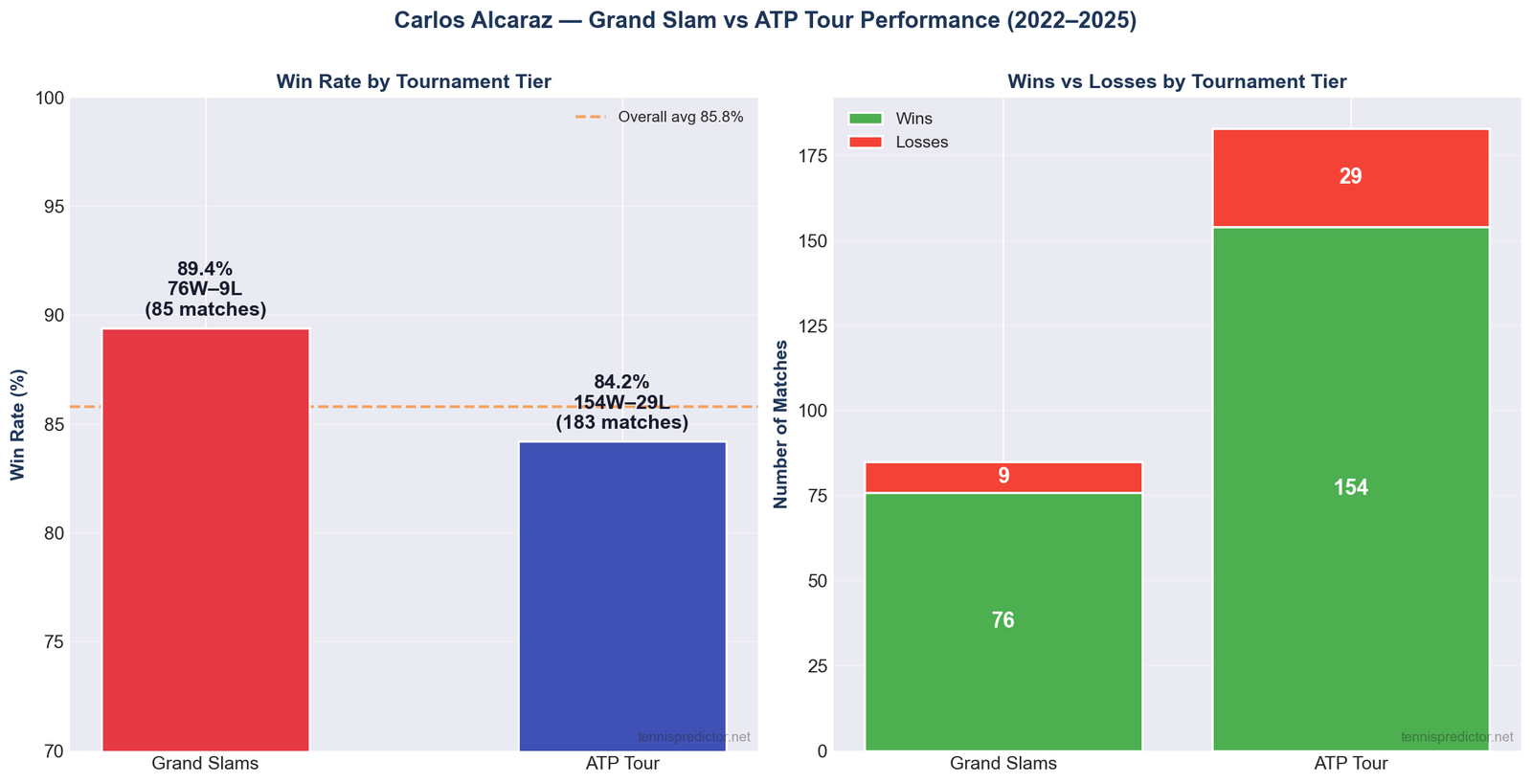
Figure 3: Win rate in majors versus ATP Tour events.
Across our dataset:
Grand Slams (85 matches):
- Win rate: 89.4%
- Wins: 76 | Losses: 9
ATP Tour events (183 matches):
- Win rate: 84.2%
- Wins: 154 | Losses: 29
That 5.2 percentage point gap is meaningful. Grand Slams bring out a different version of Alcaraz. The extended preparation, the elevated focus, the absence of the week-in week-out grind — all of it appears to unlock higher-level performance.
This mirrors the psychological profile of an athlete who rises to the biggest moments. His Grand Slam record across the four majors includes titles at the US Open, Wimbledon (twice), and Roland Garros — representing three of the four Grand Slam surfaces.
Betting implication: In Grand Slam matchups, Alcaraz's win probability often outperforms what a generic “ATP-only” intuition would suggest. Treat him as a stronger favourite at Slams than at regular Tour events — but still respect round quality (see below).
H2H against the elite: who can challenge him?
The clearest picture of Alcaraz's place in the hierarchy comes from head-to-head records. Against the best players in the world, how does he hold up?
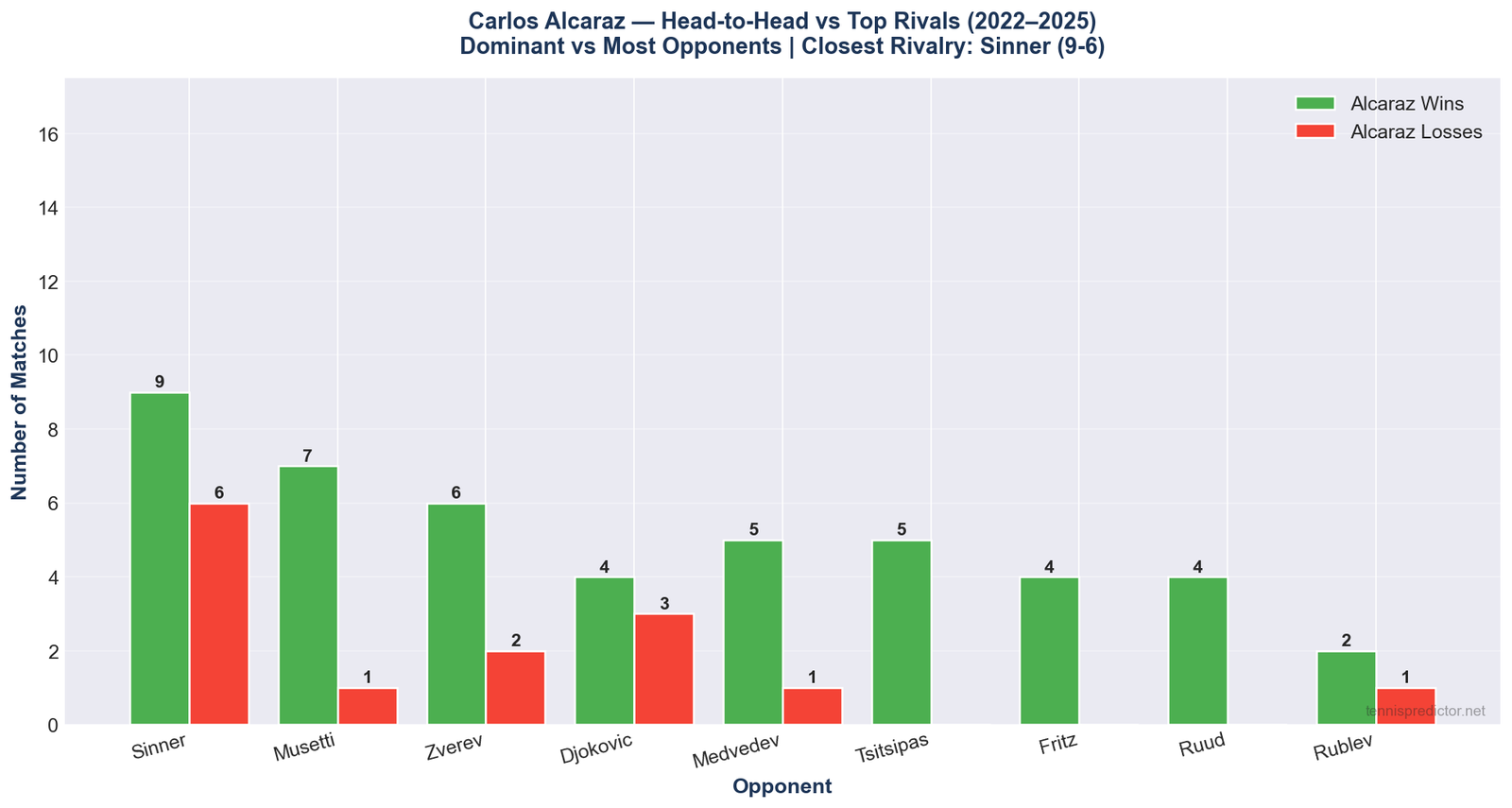
Figure 4: Selected elite head-to-head records in the 2022–2025 sample.
Here are his H2H records from our dataset (2022-2025):
- vs Jannik Sinner: 9 wins – 6 losses
- vs Novak Djokovic: 4 wins – 3 losses
- vs Alexander Zverev: 6 wins – 2 losses
- vs Daniil Medvedev: 5 wins – 1 loss
- vs Stefanos Tsitsipas: 5 wins – 0 losses
- vs Lorenzo Musetti: 7 wins – 1 loss
- vs Taylor Fritz: 4 wins – 0 losses
- vs Andrey Rublev: 2 wins – 1 loss
- vs Casper Ruud: 4 wins – 0 losses
The Sinner head-to-head at 9-6 is the most revealing. Against everyone else in the elite tier, Alcaraz has dominant or comfortable leads. But Sinner has found a formula that works — specifically on hard courts and in high-pressure moments — making him the primary benchmark opponent for Alcaraz predictions. Our dedicated Sinner analysis unpacks why that matchup breaks default models.
The 4-3 record vs Djokovic confirms something powerful: Alcaraz is competitive against the GOAT. He hasn't been intimidated by legacy or experience. But he hasn't been fully dominant either. Matches between them tend to be unpredictable by nature.
Betting implication: Against the vast majority of opponents, Alcaraz is the correct favourite. Against Sinner, approach with more caution — the Sinner matchup is genuinely tight on neutral surfaces. Against Djokovic, trust Alcaraz slightly, but prepare for variance.
The upset vulnerability: losses when the market backed him
The "unpredictable" label is not hyperbole. In our dataset, Alcaraz lost 28 matches where pre-match decimal odds existed for both players and his price was shorter than his opponent’s — i.e. he was the market favourite.
Across those 195 favourite-role matches, that is an upset loss rate of 14.4%.
Important: That is not “28 losses divided by 268 matches” (which would be 10.4%). The meaningful denominator for “how often does the favourite lose?” is how often he was the favourite, not how many matches he played in total.
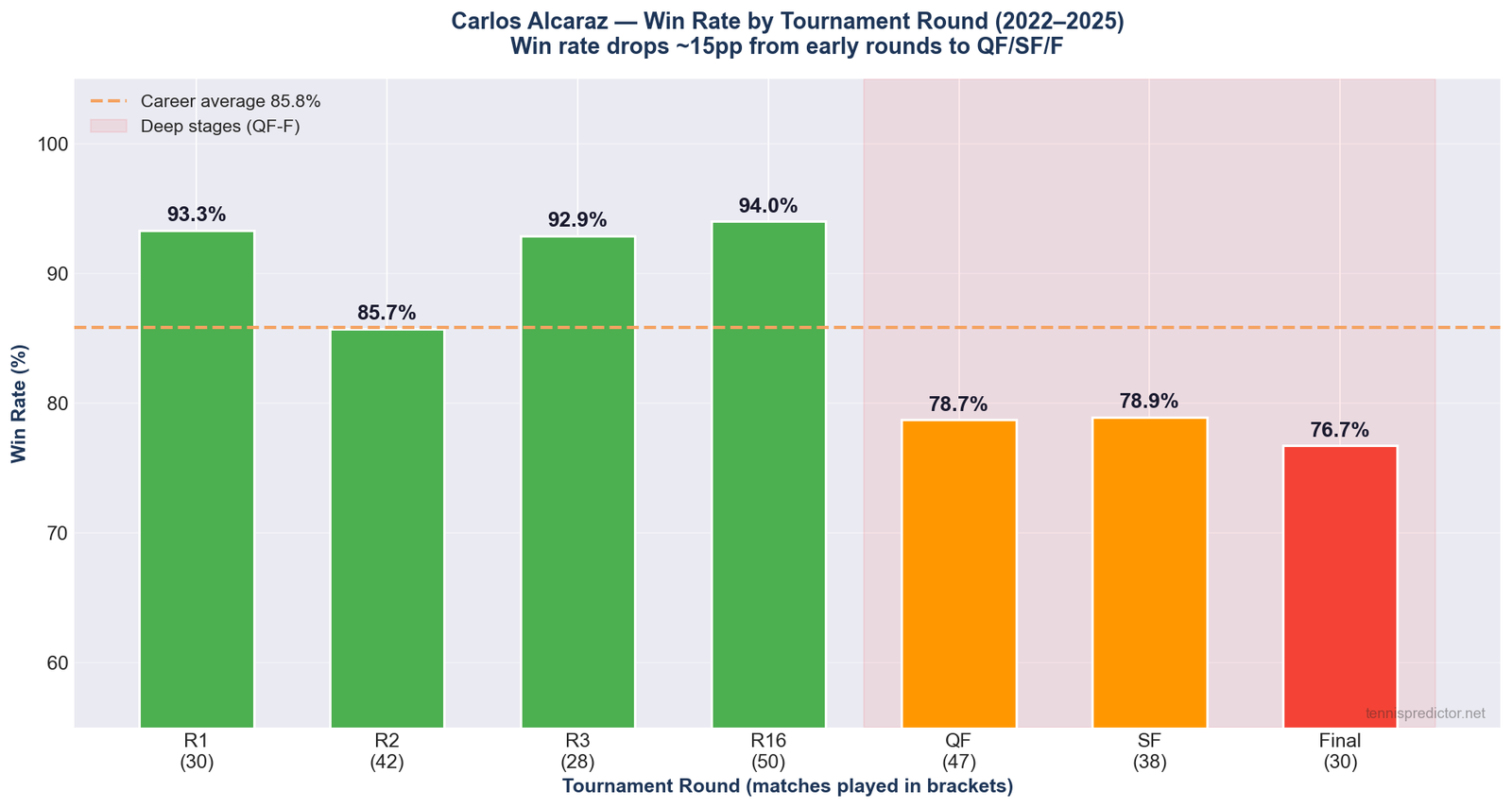
Figure 5: Win rate by round — late stages compress margins.
The round-by-round win rates expose where vulnerability concentrates:
- 1st Round: 93.3% (30 matches)
- 2nd Round: 85.7% (42 matches)
- 3rd Round: 92.9% (28 matches)
- Round of 16: 94.0% (50 matches)
- Quarterfinal: 78.7% (47 matches)
- Semifinal: 78.9% (38 matches)
- Final: 76.7% (30 matches)
There is a clear and consistent pattern: Alcaraz's win rate drops from the quarterfinal onward. Through the early rounds, he hovers between 85–94%. Once the final eight remain, he drops to roughly 78%. That is not necessarily a “choke” narrative — it reflects stronger opponents — but it does mean short prices in QF/SF/F are structurally riskier than they look on name value alone.
His 76.7% win rate in finals (23 wins from 30 finals reached) is excellent — but it still means about one in four finals ends in defeat. For bettors, that is enough variance to warrant careful odds analysis before backing him at very short prices.
What favourite-role losses look like in the data
A subsample of his upset losses as favourite (same data pipeline) shows elite opponents and diverse surfaces — not one single story:
- Losses when priced favourite include names like Sinner, Djokovic, Zverev, Norrie, and high-variance shotmakers on a given day — exactly the profile that makes value betting about price, not pick.
Takeaway: When Alcaraz loses as favourite, it is rarely random noise against tour journeymen alone; it is often a quality opponent or a context (surface, schedule, physical state) that the market underweights. That is why blind accumulation at 1.15 is fragile even for generational talent.
Implied probability: a quick conversion table
Bettors think in odds; models think in probabilities. Here is how decimal prices map to break-even win rate (ignoring vig for illustration):
| Decimal odds | Break-even win % needed |
|---|---|
| 1.10 | 90.9% |
| 1.15 | 87.0% |
| 1.20 | 83.3% |
| 1.30 | 76.9% |
| 1.40 | 71.4% |
Alcaraz’s overall 85.8% sits between the 1.10 and 1.15 columns — meaning any persistent price shorter than about 1.16 is mathematically uncomfortable unless you believe his true chance in that specific matchup clears the hurdle. Once you fold in 14.4% losses in favourite-role spots and weaker indoor data, the list of prices that clear the bar shrinks fast.
The variance profile: long matches, multiple sets
Alcaraz is one of the most effective players in tennis at grinding out long matches — but he gets into them far more often than you'd expect from a player of his calibre.
Our set distribution across 268 matches:
- 2-set matches: 125 (46.6% of all matches)
- 3-set matches: 102 (38.1%)
- 4-set matches: 27 (10.1%)
- 5-set matches: 12 (4.5%)
A critical implication: more than half of Alcaraz's matches (53.4%) go to at least three sets. This is unusually high for a player with an 85.8% win rate, and it directly feeds the "unpredictable" narrative for totals and set betting.
When Alcaraz enters three-set territory, his athleticism and mental fortitude are usually decisive. His 12 five-set matches show he can endure and win marathon battles. But three- or four-set matches also create injury risk accumulation and opponent momentum windows that wouldn't exist if he closed out in two sets.
Betting implication for over/under game markets: Expect competitive game counts in many Alcaraz matches. He is not always a clinical two-set winner by nature — he plays for points, entertains, and that translates into extended scorelines even against lower-ranked opponents.
Alcaraz's peak age trajectory
Born May 3, 2003, Alcaraz entered our dataset at age 18 and is currently 22. His 2025 win rate of 89.7% is already a career high across any full-season sample in this window.
Broad ATP career-curve research suggests male players often hit peak results in their mid-20s. Alcaraz is approaching that band already carrying multiple Slams — which is historically unusual.
What makes his trajectory worth watching for bettors: if his injury management stabilises (2024’s 51-match season was physically constrained), his surface splits could converge — or indoor performance could regress to something closer to his outdoor hard baseline. Either outcome changes pricing.
How our model handles Alcaraz
Our prediction engine approaches Alcaraz matches with parameters informed by the patterns above — aligned with how we treat other elite outliers described in our large-sample tennis study.
In practice, that means his matches get the same structural checks as everyone else — surface features, opponent strength, recent workload — plus manual scrutiny when the price implies a win probability that the conditional history does not support. If the model’s calibrated probability sits materially below the implied probability from odds, we do not “nudge” it upward to match hype. That discipline is central to how we discuss prediction failures transparently: the goal is not to win every news cycle, it is to keep probabilities honest over hundreds of matches.
For day-to-day use, pair these research pieces with the live outputs on our predictions dashboard: when Alcaraz appears, cross-check confidence, surface, and opponent tier before you treat any price as fair.
Factors that increase Alcaraz's predicted win probability:
- Grass surface (91.9% historical win rate in this sample)
- Grand Slam context (89.4% vs 84.2% at ATP Tour)
- Outdoor hard and clay versus indoor hard (large gap in the data)
- Opponent ranking below top 20
- Early rounds (R1–R16)
Factors that reduce predicted win probability:
- Indoor hard courts (62.5% win rate on 8 matches — flagged with uncertainty)
- Deep tournament stages (QF onward, ~78–79%)
- Matchups against Sinner on hard courts
- Coming off injury layoffs (2024 pattern)
- Back-to-back hard matches late in tournaments
The result is a model that respects his overall dominance while encoding the variance patterns the data actually show. We don't treat ultra-short indoor prices as “free money” — the historical rates don't support it.
A pre-match checklist (before you click "place bet")
Use this as a structured sanity pass — it does not replace bankroll limits or record-keeping, but it stops impulse bets on name value alone.
Surface and venue:
- Confirm outdoor vs indoor and hard vs clay vs grass. If the event is indoor hard, re-read the small-sample caveat and widen your fair-odds band.
Opponent class:
- Flag top-10 / major-winner opposition differently from a ranked 40–80 opponent who may still be dangerous but trades at longer prices.
Schedule density:
- Late-tournament fatigue and short turnarounds matter more for athletic, high-intensity players — especially when matches stretch to three sets or five sets.
Price vs story:
- Convert decimal odds to implied probability (see table above). If the price needs 90%+ to break even, ask whether this matchup truly clears that bar after conditioning on surface and opponent.
Model or notebook:
- If you follow TennisPredictor outputs, compare model probability to implied odds explicitly. A gap is not automatically "value" — but no gap with a huge favourite is often a red flag worth skipping.
Betting strategy: working with Alcaraz's unpredictability
Given everything above, here is how we approach Alcaraz-related betting decisions in principle:
Value bets — consider backing Alcaraz when:
- Playing on grass at odds that still reward risk (avoid mindless 1.05 stacks)
- In Grand Slam first four rounds when the draw offers a skill mismatch
- Against opponents ranked outside the top 30 on outdoor hard or clay
- Following rest periods of several days (recovery shows up in results volatility)
Caution — reduce stake when:
- Playing indoor hard courts, especially in stacked indoor fields
- Short-priced favourites in QF or SF (sub-1.40 carries real loss frequency)
- Return from injury (first 2–3 matches post-layoff)
- Playing Sinner on hard courts — treat as a true elite coin-toss structurally
Avoid — don't treat these as automatic prints:
- Extremely short odds at indoor events without matchup justification
- Parlaying deep runs without understanding correlation and variance
- Ignoring injury reporting entirely
The 14.4% favourite-role loss rate is the right order of magnitude for “market says he should win — sometimes he doesn't.” At odds of 1.15, you need about 87% implied probability to break even. His overall 85.8% win rate is close to that razor’s edge before you even layer surface and round effects. That is why staking discipline matters as much as pick quality.
Data sources and methodology
All aggregates in this article were recomputed from our tournament match database. Favourite-role upset losses are counted only when both players have pre-match decimal odds and Alcaraz is the shorter-priced player before the match.
Frequently asked questions
What is Carlos Alcaraz's overall win rate in this study?
He won 230 of 268 matches (85.8%) between 2022 and 2025 in our database.
Which surface shows the highest win rate?
Grass at 91.9% (37 matches).
Why is he called “unpredictable” if he wins so often?
Because expectations and odds often assume dominance everywhere — while the data show large splits by surface, round, and opponent class (for example Sinner on hard courts).
How often does he lose as the pre-match favourite?
In matches with odds for both sides where he was the favourite, he lost 28 times out of 195 — 14.4%.
Is indoor hard performance reliable in this sample?
It is directional only: 8 indoor hard matches. Use it as a risk flag, not a definitive probability.
Who is his toughest elite head-to-head in the data?
By record, Jannik Sinner at 9–6 — the tightest margin among the elite opponents listed.
Do Grand Slams matter versus regular ATP events?
Yes: 89.4% in Slams vs 84.2% on ATP Tour in this dataset.
How should bettors use this with model predictions?
Treat Alcaraz as context-dependent: adjust for surface, round, opponent, and injury state — the same way we describe in our value betting primer.
Conclusion: embrace the variance, exploit the patterns
Carlos Alcaraz is not "unpredictable" in the chaotic sense — he's unpredictable relative to inflated market expectations. His 85.8% win rate is elite. His Grand Slam performances are exceptional. His head-to-head dominance over most of the tour is clear.
But his surface-specific variance, his late-stage win-rate dip, and his measurable losses as a favourite show why pricing matters more than narrative.
The approach that works: don't treat Alcaraz as a monolithic favourite. Treat him as a surface-and-context-dependent player — at peak credibility on grass and in Grand Slams, and at elevated risk indoors and in elite matchups that the data already flag.
Use the data. Respect the variance. And accept that with Alcaraz, some matches will still surprise you — that's part of what makes him the most watched player in tennis.
Statistics are derived from our tournament match database for 268 Carlos Alcaraz matches (2022–2025). Upset-loss counts require both players to have pre-match decimal odds; the 14.4% rate uses 195 matches where Alcaraz was the narrower-priced player.


